
The Bright Side

Culture & Education — Heritage

Creative achievements, educational progress, culinary discoveries, and cultural celebrations

1416 stories

Atlas Obscura11/25/2026

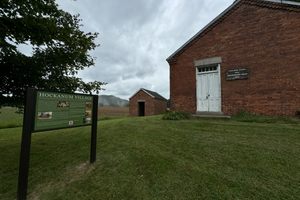
Hockanum School House in Hadley, Massachusetts

Built in 1840, this one-room School House served as the educational center for all of the first to eighth grade children in the Hockanum area, later serving only up to sixth grade. This was one of several school houses serving small neighborhood communities around Hadley. A 1647 Massachusetts law required all towns with 50 or more families to hire a teacher to instruct their children in reading and writing. Parents and students contributed to their school in the form of money, goods, supplies, and chores. These were one-room schoolhouses, on land that was usually donated. Most schools had one book, the "New England Primer," that was used to teach the alphabet, syllables, and prayer. The last class to go through this school was in 1933. By then, it was more economical to bus students to the center of town than to keep the neighborhood school houses open. Along with the outhouse next to it, the Hockanum School House was, and still is, taken care of by the Hockanum community.

Atlas Obscura11/25/2026

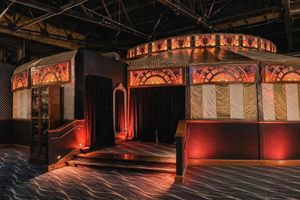
The Hidden Spiegeltent in Chicago, Illinois

Spiegeltents were made to travel. These round wooden dance halls, lined with mirrors and stained glass, went from fair to fair. They went up fast and came down fast. The one on Randolph Street is not going anywhere. It was built indoors, on the 14th floor of a Loop building. The building opened in 1926. Rapp & Rapp designed it, with the Oriental Theatre movie palace on the lower floors. The theater is now the James M. Nederlander Theatre. The whole building stands on the site of the Iroquois Theatre, where a fire in 1903 became one of the deadliest in American history. High above the theater, the architects put a large hall for Masonic meetings. It sat empty for decades. Later it was turned into offices, and a dropped ceiling hid the room completely. When the building was converted into the Cambria Hotel, workers took that ceiling down and found the old hall again, steel bow trusses and all. In 2019 the tent came over from Belgium in pieces, about 4,000 of them. Belgian tent builders put it together inside the hall, the traditional way, with no nails. It is about 72 feet across. From the hall, it looks like a small circus parked under factory trusses. Inside, there is carved wood, stained glass, velvet and mirrors everywhere. The mirrors are not just for looks. They let guests see around the posts that hold up the roof. Since October 2026, the tent has been the home of Kermess by Circensia, which kept it right at the center of the room.

Smithsonian Magazine11/25/2026

The Ten Best Books About Food of 2026

Food can provide comfort, and so can cookbooks and food-related memoirs—especially this batch, many of which explore how food can be a salve for mental health

Atlas Obscura11/25/2026

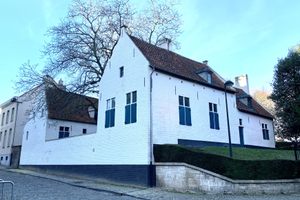
Beguinage of Anderlecht in Anderlecht, Belgium

Tucked away in the historic centre of Anderlecht, just a stone's throw from the Collegiate Church of Saints Peter and Guido, lies one of Brussels' lesser-known historical treasures: the Beguinage of Anderlecht. Founded in 1252, it is considered the smallest beguinage in Belgium and once provided a home to a community of just eight women. Unlike traditional convents, beguinages offered women an opportunity to live in a religious community without taking permanent monastic vows. The beguines were typically unmarried women or widows who chose a life of prayer, work and mutual support. They followed rules of chastity and obedience but remained free to leave the community whenever they wished. This offered women a degree of independence that was relatively unusual in medieval society. The Anderlecht beguinage consists of two modest buildings surrounding an enclosed courtyard garden with an old well. The buildings date from different periods, with sections originating in the 16th and 18th centuries. From the garden, visitors can enjoy a view of the neighbouring Gothic collegiate church. Interestingly, the beguinage was locally nicknamed the Klaphuis, meaning 'chatterbox' in Dutch, a playful reference to the conversations that supposedly took place among its residents. Following the French Revolution, the religious community disappeared and the buildings were converted into a hospice for disadvantaged women. They continued serving this purpose until 1928. In 1930, the complex became a local history museum, displaying archaeological finds, religious art and objects illustrating Anderlecht's past. After decades of use as a museum, the buildings underwent an extensive restoration, completed in 2022. The restoration aimed to recover the original appearance of the complex, allowing visitors to appreciate its historic architecture. Today, the beguinage offers a rare glimpse into the everyday lives of medieval women and the history of one of Brussels' oldest communities. Despite being surrounded by the busy streets of Anderlecht, stepping through its entrance feels like discovering a little pocket of tranquillity that has survived for almost eight centuries.

Atlas Obscura11/24/2026

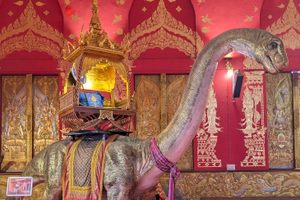
Dinosaur Pulpit at Wat That Phra Aram in Tambon Nai Mueang, Thailand

In a Buddhist temple in the northeast of Thailand, not far from the border with Laos, one can find the World's Only Dinosaur Pulpit. Located in the city of Khon Kean, the fourth-largest city in Thailand and the heart of the Isan region, the pulpit can be found inside the Buddhist temple Wat That Phra Aram Luang. If you look closely, you'll notice there are dinosaur mural paintings on the walls inside the temple as well. Having been the site of Thailand’s first dinosaur fossil discovery, Khon Kean boasts a variety of dinosaur-related sites. Dinosaur imagery is scattered throughout the entire region, giving a nod to this history. Among these references is the World's Only Dinosaur pulpit. The pulpit is shaped like a giant Phuwiangosaurus, Thailand’s native sauropod dinosaur. The dinosaur was originally discovered in the hills of Phu Wiang outside the city, and officially named in 1994 in honor of Her Royal Highness Princess Maha Chakri Sirindhorn.  Monks reportedly stand inside the dinosaur to give sermons at times. Wat That Phra Aram Luang temple is a stunning sight to behold on its own, resplendent with numerous golden peaks and facades painted in bright shades or red.

Atlas Obscura11/24/2026

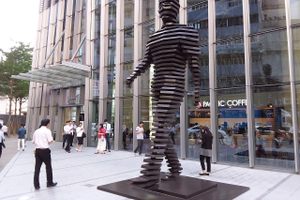
Walking East in Hong Kong

Portraying a man walking away from a modern office tower block, as if to explore the surrounding community, 'Walking East' is an impressive painted metal sculpture placed directly onto the street without a plinth. Its creator, French Hong Kong-based sculptor Polo Bourieau, cited the inspiration for 'Walking East' as 'les adventuriers du quotidien' (the daily adventurers), the everyday working people going about their day in the Kwun Tong industrial district. Located next to a busy junction, the 5-metre tall statue becomes especially poignant during work opening, lunch and closing hours. Surrounded by commuters and workers, it looms large over the hordes, seemingly journeying with them as they attempt to navigate their daily lives and Kwun Tong's crowded streets.

Atlas Obscura11/24/2026

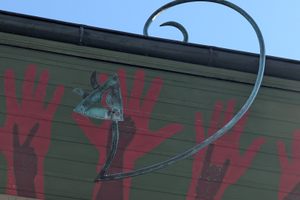
Wasserspeier (‘Water Spitter’) in Bern, Switzerland

Since 1984, the dragon-like Wasserspeier ("Water Spitter") on Bern’s Münstergasse has been delighting and fooling locals and tourists alike. Every spring, artist Luciano Andreani (*1947) and homeowner Tinu Mühlethaler install the spout on the roof of the historic Old Town building. Anyone who lingers too long while bending down to pick up one of the five-franc coins scattered below is in for a surprise and gets a refreshing splash of water from above. The art installation sprays water into the street periodically.  Beware - a refreshing shower is guaranteed! The Wasserspeier is particularly popular with children and the young at heart.