Looking beyond natural sequences
A new machine-learning framework aims to improve the success rate of computational protein design while moving away from results that reproduce sequences found in nature.
Scientific advances that inspire — new discoveries, research milestones, space missions, nature insights, and emerging technologies
186 stories
A new machine-learning framework aims to improve the success rate of computational protein design while moving away from results that reproduce sequences found in nature.
Researchers, led by Prof. Alhanan Bornstein from Tel Aviv University, mapped for the first time the gut bacteria of more than 900 pet dogs and found that the microbiome composition changes with age, is influenced by diet type, and even allows estimation of the dog's biological age. The findings could advance veterinary medicine and provide new insights into human aging processes.
She was only 17-19 years old when she was buried in northern Poland around the mid-17th century, with a chain around her neck and a lock on her ankle. Now, using DNA testing, isotope analysis and other archaeological findings, researchers are trying to understand who "Zosia" was, why she was buried in such an unusual way, and exactly what her community feared at that time.
The early universe was a chaotic place, filled with young galaxies that collided and merged into ever larger galaxies over billions of years. The Milky Way experienced such collisions, but it is difficult to decipher because so much time has passed. Now, thanks to the Hubble Space Telescope, evidence has been found that it merged with another galaxy during the earliest stages of its development.
A study by researchers at the Technion found that when multiple evolutionary pathways grant an organism equal fitness, it tends to develop toward a more stable and resilient direction against changes and disturbances — even without a direct survival advantage that would favor those traits.
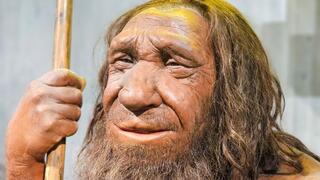
Two leg bones found in Taiwan suggest that the Denisovan was much taller than other human populations of the same period, and also taller than the modern average.
The discovery reveals a unique combination of classical Greek style with traditional clothing, and offers a rare glimpse into the rich culture and the distinctive identity of the inhabitants of Anatolia under Persian rule. The preserved find, which served as paving stone on an ancient Roman road, may represent a high-ranking leader from the temple of the goddess Cybele.
This discovery points toward new combination strategies against cancer, and may explain the iron buildup seen in disorders such as early-onset Parkinson’s disease.
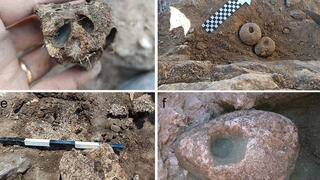
A study by the University of Haifa revealed, using wear marks on sickle blades, how the Natufians tracked grain ripening, cut them over weeks, and possibly even stored the harvest for the next season.
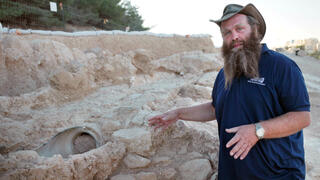
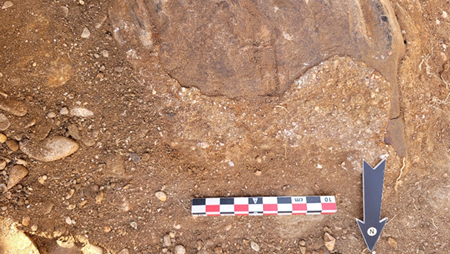
During scans conducted by the fighters beneath the building, they located a burial cave and additional artifacts. A preliminary examination by the Antiquities Authority revealed that the graves date to the Second Temple period.
The total solar eclipse took me on a chase in the heart of the scorching Spanish wasteland, amid cancellations, delays and scientific history, after one massive sun. Travel journal
A new study in a burial chamber at the necropolis of Tebai reveals how burial customs have changed over centuries – and what the burial of a dog alongside mummies tells us about the beliefs of ancient Egyptians.
The insect dated to the dinosaur period had a long, flexible "snout" that it used to sip sugar‑rich plant juice. It received its nickname from the character in the TV series "The Taltabiz." Through its unique adaptation, the ancient insect managed to survive the harsh living conditions in forests that suffered frequent fires.
A new study identified six young red dwarfs that contain lithium that should not have remained in them. The most straightforward explanation: they swallowed rocky material with a mass of several Earths.
Also: Which spice is related to turmeric? How does an electric refrigerator work? And which field is the book paradox related to? Scientific trivia
A new study explains what in gold's atomic structure allows the precious metal to avoid oxidation and the development of a patina.
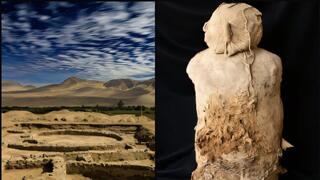
The remains were discovered in a canal near an ancient pyramid at the Huaca Pucllana site, which was a ceremonial center of the Lima culture. The positioning of the body and the structure it was found in raise the possibility that he was buried as part of a ritual ceremony.
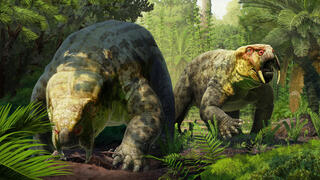
A new study reveals that snake evolution was far more diverse than previously thought: a fossil discovered in Brazil indicates that as early as 80 million years ago they occupied varied habitats and developed different sensory strategies.
A research team that includes three Israeli scientists discovered a new star very close to the black hole at the center of our galaxy. The discovery will enable measurement of new properties of the massive object and a better understanding of the history of our galaxy.
A new study by Whitehead Institute researchers identifies how the widespread parasite Toxoplasma gondii survives in crowded environments in infected cells, which helps it persist in long-lasting brain cysts.