

Yonhap Culture (English)10/27/2026
BLACKPINK's Jisoo to release 2nd prerelease single 'Addicted'
SEOUL, Oct. 27 (Yonhap) -- Jisoo of K-pop girl group BLACKPINK will release "Add...
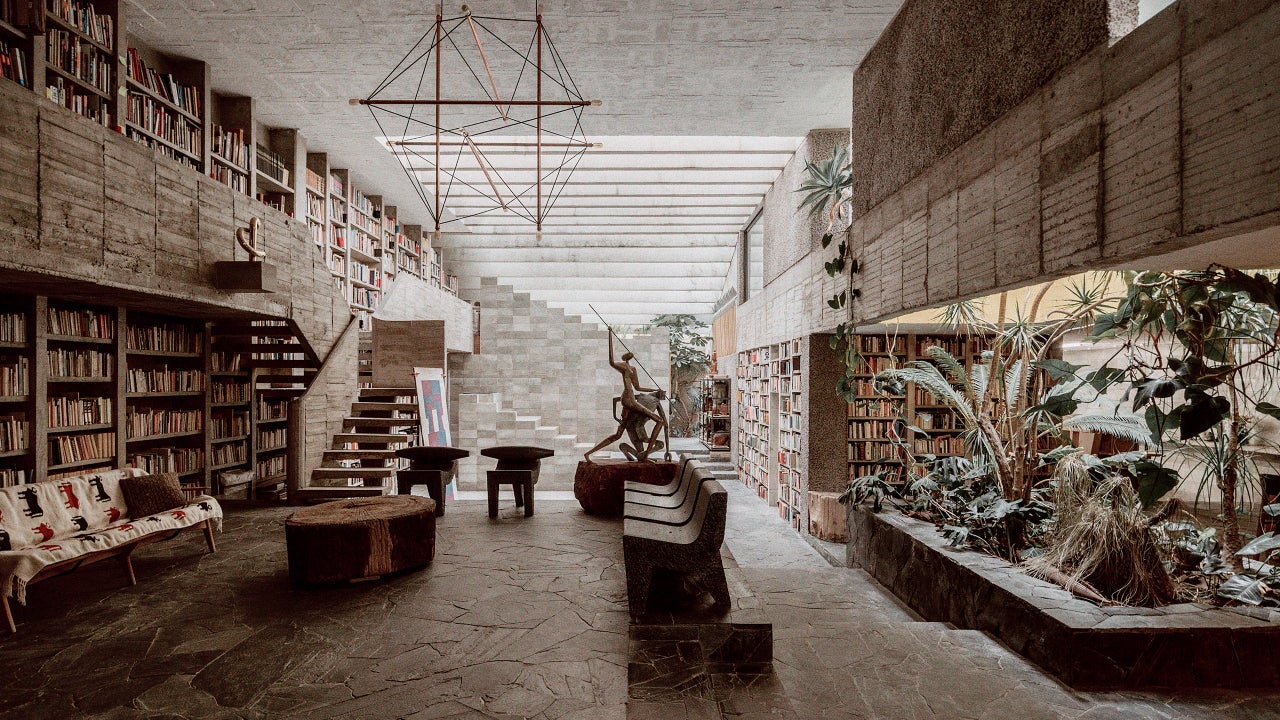
To walk through Mexico City is to stroll down centuries at once. The ruins of the Aztec empire are exposed on the ground beside colonial structures built from the same stones that once made up the ancient temples. A few blocks farther, 1900s European-inspired townhouses are pressed against 1940s Art Deco apartments, and modern skyscrapers shoulder through the city’s diverse skyline. Outside Mexico’s capital, a similar trend holds true. Various aesthetics that would otherwise seem incompatible blend together to form a new architecture movement that borrows from its long past while creating something entirely new. In her new book, Mesoamerican Modern, the curator Su Wu and the photographer Luis Garvan document these like-minded homes and propose a new way to understand the region’s most thrilling contemporary residential spaces: as continuations of ancient traditions that never really went away. “In many places in the world, the convention is to use geographic descriptions—Asian art, Oceanic art, or African art—yet in the Americas, the use of the term pre-Columbian has this implication that history ended,” Wu, an expatriate who has lived in Mexico City for more than a decade, tells Fast Company. “It implies that there was no resilience, no continuity, and that the ideas are not still relevant and present in how people think about modern and contemporary architecture and design, which is not the case,” she says. Through a survey of 16 contemporary homes in Mexico, Wu reveals a style that draws from shared cultural elements like history, materials, and an appreciation for the natural landscape. Looking to a precolonial past Wu’s book focuses solely on Mexican homes. But the term Mesoamerica, in its title, refers to a broader historical and cultural area, one spanning most of Mexico as well as Guatemala, Belize, and other regions in Central America. Casa Amalia, Lomas de Santa Fé, Mexico City. [Photo: Luis Garvan] The vast area encompassed myriad tribes and empires with dozens of languages. Yet they had similarities, including independently developed agricultural systems, a shared astronomical calendar, and highly planned cities with roads leading toward a center of power. And the Mesoamerican landscape is as diverse as its culture, with Pacific coasts and tropical beaches, valleys and mountains. Centuries later, shared traits have lingered, trickling into a contemporary approach of designing spaces and interiors through that appreciation for the landscape, an intentional ambiguity in a space’s function, and materials sourced locally—whether they be considered precious, like hand-painted tiles, or humble like tezontle, a type of reddish volcanic rock. Working with nature The homes Wu selected for the book react to or engage in conversation with their surroundings in different ways. Casa Bernal, San Sebastián Bernal, Querétaro.[Photo: Luis Garvan] Take Casa Bernal in San Sebastián Bernal, a pueblo mágico (an official designation for towns of historical importance) in central Mexico overlooking one of the world’s largest monoliths, the Peña de Bernal. There, Marcos Ruiz, cofounder of Feria Material, a contemporary art fair in Mexico City, decided to build a landscape-framing addition to an historic structure. Ruiz retained the house’s sixteenth-century facade, whose moldings bear Mesoamerican symbols carved on the stone. Inside, the home is mostly concrete, featuring monumental forms inspired by the shapes of ancient architecture, like an inverted pyramid that leads into a firepit. Nothing gets in the way of the view. When a wall had already been poured in the dining room, Ruiz noticed it blocked the view of the monolith. So he cleaved a section of it. “What they did was cut the top of the wall and angled [the window] so he can see the full mountain from his seat,” Wu says. Less defined space Contemporary homes usually reflect a Eurocentric way of understanding a room’s function and assigning its appropriate furnishings. A living room gets a couch, a dining room gets a dining table. But the architects featured in the book don’t adhere to these conventions. “In these conversations with architects, I was surprised by the idea that you don’t need to fill every room with furniture—that the purpose of a space is flexible,” Wu says. “They talked about having a space that was not empty, but that was open for possibility.” Casa 720, Valle de Bravo, Estado de México. [Photo: Luis Garvan] Consider Casa 720 by the architect Fernanda Canales. Located in Valle de Bravo—a popular weekend getaway an hour and a half outside Mexico City—the circular home takes the shape of the Aztec calendar, one buried by the Spaniards after the fall of Tenochtitlán, the grounds of modern-day Mexico City. The residence’s concept borrows from history, but also leaves a deliberate empty space—a patio—at the center, allowing for multiple uses. As the Aztecs built their city to point toward the center of power, the residence’s floorplan radiates from the middle. The idea of multifunctionality extends to the roof, which becomes a social space thanks to landscaping and a built-in seating area. Rigorous materiality Wu identified materiality as an invisible string tying together the homes in the book. This quality even helped her settle a debate over whether to include one of Mexico’s most famous architects, Luis Barragán, in the Mesoamerican Modern movement. “Everyone seemed to know immediately whether he was Mesoamerican, and didn’t agree,” Wu writes in her book, noting that Barragán, who is Mexico’s only Pritzker Prize winner to date, never explicitly cited ancient cultures as a form of inspiration. Yet an appreciation for the surroundings is evident in his work. Casa Pedregal, El Pedregal, Mexico City.[Photo: Luis Garvan] At Casa Pedregal, Barragán brings in volcanic stone from the neighborhood’s natural terrain, creating interiors and courtyards with the local material. He juxtaposes it with a vibrant pink paint veiling square structures that respond to the shifting natural light—his signature move—to create a serene space that elevates the humble material into a work of art. “What distinguishes Mesoamerican architecture, then, is a sensitivity to the right materials for the conditions, with beauty as an attenuating consequence,” Wu writes. As the debate around Barragán illustrates, the Mesoamerican Modern movement is still developing as designers explore new ways to integrate the region’s rich history into their work. “Part of what it means to be Mesoamerican, in a contemporary way, is this capacity for architects to consider and reconsider what the tradition means to them, and what elements of it are meaningful for how they want to build moving forward,” Wu says.
Curated from Fast Company Co.Design. Classified as Culture & Education by AI, which sometimes makes mistakes.
SEOUL, Oct. 27 (Yonhap) -- Jisoo of K-pop girl group BLACKPINK will release "Add...
Packed with nutrition, Gahat Ka Shorba is an ideal winter comfort food.
The Israeli actress received the degree at a festive ceremony marking the 70th anniversary of Bar-Ilan University's founding. In the justification for the decision, the university cited her achievements in Hollywood, her international impact, and her standing alongside Israel. Onstage, Gadot said: "In a few hours the polling stations will open for perhaps the most decisive elections this country has seen in years. Tomorrow, each and every one of us has the opportunity to make a change."