

The Bright Side
arrow_backHome
House of Egyptian Architecture in Cairo, Egypt
Culture & Education
Atlas ObscuraEN
October 19, 2026

House of Egyptian Architecture in Cairo, Egypt

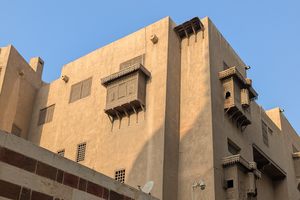
The Ali Labib House, constructed by two brothers in the 1700s, is a rare example of a fully preserved Ottoman-era Cairene mansion, with elements drawn from both Ottoman Turkish and Egyptian Arab architectural traditions. Since 2010 it has housed the House of Egyptian Architecture, a museum and cultural center showcasing the history of building design in Egypt from antiquity through the modern day. The house itself is a time capsule of Islamic decorative arts, full of elaborate tilework, murals of Turkish cityscapes, stained glass, delicate wooden screens, and intricately carved and painted ceiling panels. Like most residential buildings of the era, the house turns its best face inward, with a relatively plain exterior and a much more ornamental interior built around a central courtyard. A collection of shaded open spaces, high ceilings, and elevated windows keep air circulating - wealthy Egyptians' solution to the desert heat in an era long before air conditioning. In addition to the decor, each room displays an array of photographs, diagrams, and dioramas from all periods of Egyptian architectural history, including both famous landmarks and less grand residential projects. While most text is in Arabic, all sections of the museum are very well illustrated. The rooftop offers a sweeping view of the minarets, fortifications, and pigeon coops of historic Cairo, including several landmarks described by the museum's exhibits.

Read More

Curated from Atlas Obscura. Classified as Culture & Education by AI, which sometimes makes mistakes.

Why are you reporting this article?

Why are you reporting this article?
0/500

More like this

More ›
Bangkok Post Life10/20/2026

Pushing the limits

Strapping his feet to a rowing machine, Vasupol Leerungruang pulled the handles to his chest, leaned forward on the return and repeated the rhythm. In front of him was a monitor that tracked and compared his progress with others. This was part of his training to ensure he is in the best shape possible to compete in next year's Hyrox World Championships in Hong Kong.