
Yonhap Culture (English)10/14/2026
'Doctor X: Mafia in White' tops Netflix's weekly non-English TV chart
SEOUL, Oct. 14 (Yonhap) -- The Korean medical drama "Doctor X: Mafia in White" d...
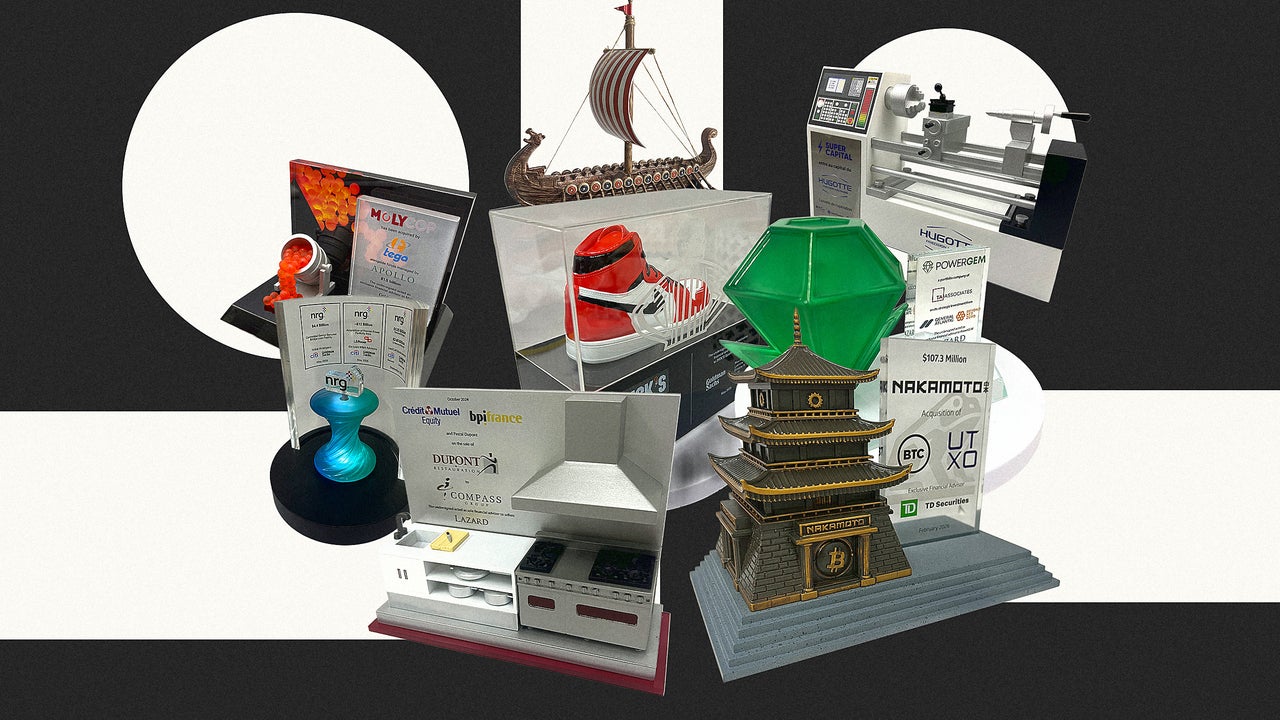
When strolling the hallways of his first internship in investment banking, Alex R. kept noticing small trinkets crowding the desks of executives and junior analysts alike, as if each workstation grew its own skyline made up of knickknacks. Some were simple: glass prisms the size of a coffee mug with a company’s name and the bank’s logo etched on the surface. But others were much flashier. Some were adorned with 3D-printed elements, floating features, and specialized lighting. The awards’ silhouettes sometimes took the form of the Bitcoin logo, a game console, or even a Japanese temple. [Photo: Courtesy HV Recognition] Alex, who is now a full-time investment banker in New York City, wondered what these eccentric objects were. He sheepishly broached the topic with an analyst on the team, not wanting to look uninitiated. “I asked them, ‘What are these things?’” he tells Fast Company. (Alex’s last name as well as those of other bankers mentioned have been redacted due to fear of professional repercussions.) For an industry whose public image is one of intensity (see the ego-driven, viciously competitive characters in Industry or the Wolf of Wall Street), the idea of the grown men behind million-dollar deals swooning over tiny desktop trinkets seems absurd. Especially when flashier perks like steak dinners at Casa Cipriani, bottles of Dom Perignon, and sometimes even the occasional Rolex are considered normal industry rewards. But for many, it is the $100-a-piece deal toy that they covet the most. Taking many shapes and sizes, the figurines serve as a sort of participation trophy for the closure of a transaction—a memento for those involved in a deal and the bank’s clients. To anyone outside the finance universe, the concept of deal toys is foreign, but within the industry the toys often become one of the highest signifiers of success for young analysts. So much so, when two investment bankers in their mid-twenties overheard a conversation about deal toys, they lit up with joy—mixed with confusion over why “normies” knew, or cared about, their tradition at all. “How did you hear about this in the first place?” one asked. The other chimed in, “I forget people don’t know these exist.” [Photo: Courtesy HV Recognition] The art of the deal toy Before deal toys existed, bankers had newspaper clippings to commemorate their work. The deals appeared in the form of newspaper tombstone ads to adhere to the Securities and Exchange Commission’s requirement to publicly disclose big deals like initial public offerings. The brief ads, which ran in publications like The Wall Street Journal or the Financial Times, were basic in style, listing the underwriters for a deal and brief details on the transaction. Eventually, though no one can say exactly when, the tombstone came off the page and moved to the desk. (The name tombstone has evolved to become a synonym for a deal toy.) At some point in the 1970s, bankers looked for a more permanent recognition outside of a tiny newspaper ad that could get thrown out. “They started simply taking a digital print, a card cut out with all the deal information on it, and they would embed it into . . . lucite—that way, it would stay embedded and last forever, and they would gift that to everyone that was involved in the deal,” says Erik Steudler, founder and president/CEO of Milestone Awards, a deal toy manufacturer with offices from New York and Nashville to Hong Kong and London. [Photo: Courtesy Milestone Awards] Eventually, a cottage industry of toy manufacturers emerged. Entrepreneurs figured that, regardless of location, financiers want a physical form of recognition. They were right. A handful of companies focusing solely on corporate awards—like deal toys—gained momentum, employing dozens of designers and sales people. The current landscape is made up mostly of alumni of those original businesses who have branched out on their own. Over the decades the practice grew into a global tradition, with in-house design teams working alongside financial institutions to develop their own trinkets, which are now made mostly in China. [Photo: Courtesy HV Recognition] There was a brief decline in deal toys after the collapse of Lehman Brothers in 2008, which triggered more stringent regulation on bank spending. The industry has since rebounded with an even larger demand as financial institutions lead more lucrative transactions than ever. As the size of deals goes up, so does the deal toy market. The tech boom and consolidation trend is also helping. Think big name mergers like the Paramount-Warner Brothers deal or forthcoming billion-dollar IPOs from AI companies like OpenAI. Deal toys are now a $60 million industry. Designs have become more ambitious, too, with manufacturers using emerging technologies like 3D printing to create bespoke toys. “I find with every year that passes, there’s more and more that becomes feasible and durable,” says Gregory Thomas, sales director at HV Recognition, one of the leading firms in the industry with offices in Europe, Asia, and the U.S. “If you’d have asked me 10 years ago the stuff that I was doing today, I’d would’ve said you’ve lost your mind.” [Photo: Courtesy HV Recognition] Thomas, who has spent decades in the deal toy business, has personal highlights including a basketball enclosed in an acrylic box and a Nike Air Jordan sneaker the size of a loaf of bread, both made using custom molds and printing methods. Thomas launched his former company’s Asia operations, has worked in various markets, and has noticed how design preferences change across markets. While European clients might prefer subdued, minimalist designs, American analysts often opt for a “bigger the better” approach. Today, the toys take many shapes. When she was a sophomore intern, Kirsten W., a young investment banker in NYC, caught a couple of analysts swinging what looked like a baseball bat. It was actually a deal toy. “One of my VPs just got a new one and it’s a giant wizard on a marble plaque, and I’ve also seen a bowling ball,” she says. [Photo: Courtesy HV Recognition] Making the deal toys The life of a deal toy begins in the hands of junior analysts, who, upon closing a deal, are tasked with reaching out to manufacturers to develop a concept. While some view the process as just another checklist to complete, many use the opportunity as a creative outlet in an otherwise logistical job. “The whole process is pretty exciting the first time you get to do it,” says Michael D., another young New York banker. “When you finally get it, it’s fun to see it in person, and people in the office are interested in seeing it as well.” Sometimes analysts come in with a clear idea, referencing icons relevant to the deal. A transaction with a Japanese company might incorporate the country’s architecture, while other times a client’s special interest makes it onto the design—like the time a figure of Slash, the Guns N’ Roses guitarist, ended up on a deal toy. Some manufacturers will take the initiative and seek out notable deals, as did Thomas, who reached out to industry contacts to propose a design for SpaceX’s $86 billion IPO. Their proposal featured an alien dressed as a cowboy riding a vertical SpaceX rocket with LED lighting throughout; Elon Musk’s face was emblazoned in a crystal panel beside the deal’s details. The timeline from brainstorming to unboxing the toys may run upwards of two or three months, depending on the complexity of the design. A more affordable toy might borrow from the original deal toys, set as clear prisms or glass cubes with the deal’s details printed on the object. But some toys can go as wild as physics will allow, with custom molds made for the objects, 3D printed elements, and even magnets used to create a floating illusion. The budget for deal toys varies, with some deals having a budget of thousands of dollars. The budget determines who gets a toy. Larger budgets allow for dozens of team members to get one, sometimes even including the lawyers on the deal, while other times only a handful of analysts might make the cut. [Photo: Courtesy HV Recognition] Bragging rights While it may seem like frivolous spending, the toys have intangible value for both the bank and the bankers. “We refer to it as ‘desktop advertisement,’” says Steudler at Milestone Awards. “The clients keep them on their desk . . . and will always remember the job that their investment bank did because their logos are on the deal toy and so they’ll go back to them.” For the bankers, the toys are both a rite of passage and a token of appreciation for the hours of work that go into a transaction. [Photo: Courtesy HV Recognition] “You put so much time and effort into something and it’s a nice symbol of your work,” Kirsten says. “I think for more senior bankers it’s more of a sign of prestige—a ‘who has more’ contest—but early on in your career I think it just more of a satisfying close, and nice to be recognized for your hard work.” But the toys undoubtedly also feed into a character trait many associate with the finance industry. “It’s a huge ego thing for bankers,” says Thomas at HV Recognition. “It’s almost like a portable CV.” And while many acknowledge that the toys don’t really matter in the grand scope of things—they also agree, they kind of do. “My personal opinion is that they don’t matter,” Michael says. But, he adds, “when my coworker makes fun of me for my football team losing, I remind him I have more deal toys.”
Curated from Fast Company Co.Design. Classified as Culture & Education by AI, which sometimes makes mistakes.
SEOUL, Oct. 14 (Yonhap) -- The Korean medical drama "Doctor X: Mafia in White" d...
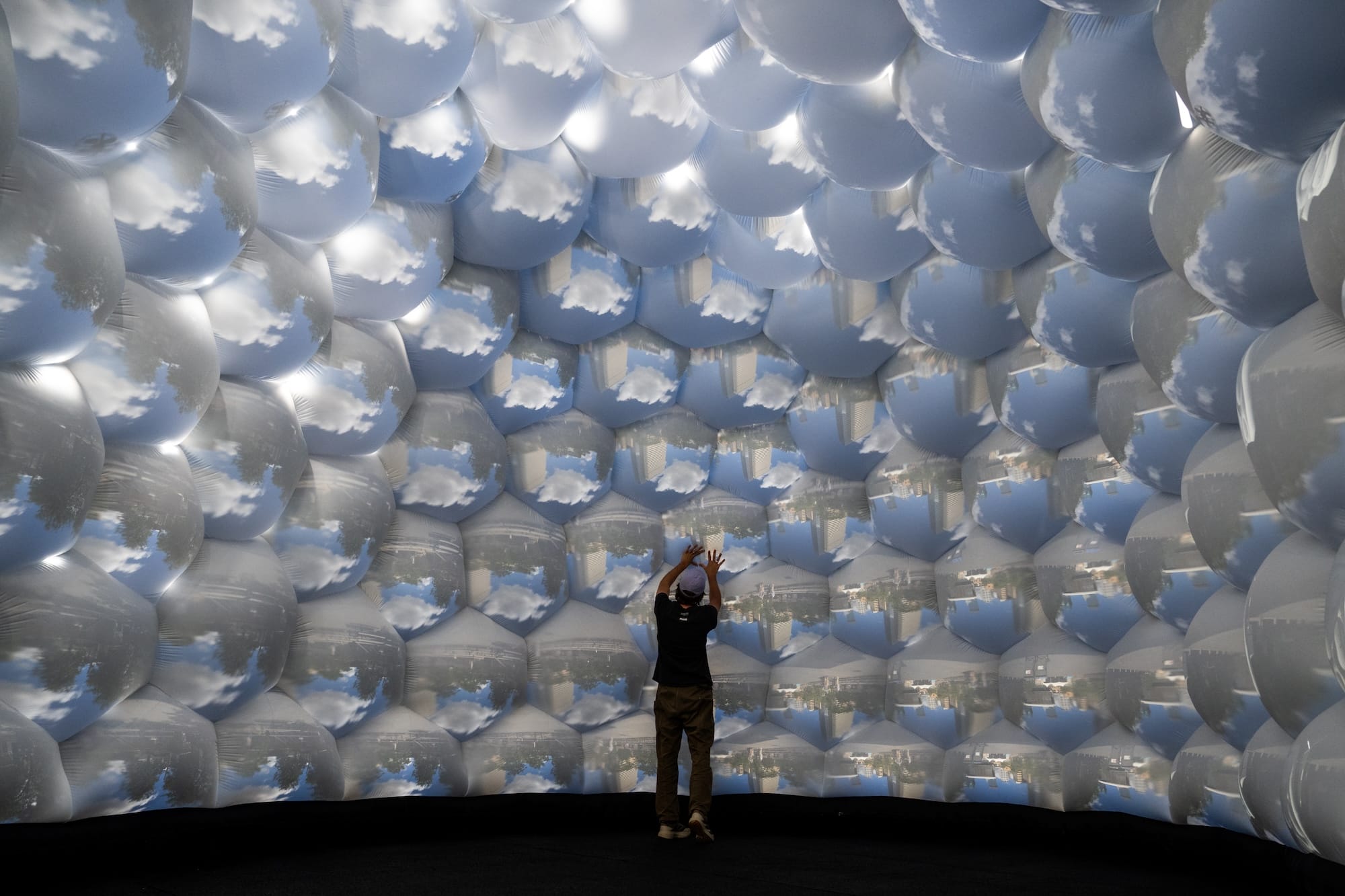
In "Compound Camera 3," viewers step inside a luminous viewing room. Do stories and artists like this matter to you? Become a Colossal Member today and support independent arts publishing for as little as $7 per month. The article 221 Camera Obscuras Fill Pneuhaus’ Immersive, Inflatable, Image-Capturing Installation appeared first on Colossal.
"I go into my garden and I come out a better person every time. That is for sure." The post Pamela Anderson started her ‘next chapter’ as a gardener, growing fresh produce for local food banks appeared first on Upworthy.