
The Bright Side
arrow_backHome
This Texas startup is turning oil well waste into EV batteries
Business & Technology
Fast Company TechnologyEN
October 26, 2026

This Texas startup is turning oil well waste into EV batteries

Across the Permian Basin, the vast, mineral-rich swath of land in West Texas that supplies much of the nation’s crude oil, derricks pump out massive amounts of oil, roughly 6 million barrels a day.  But that amount pales in comparison with the amount of dirty, brackish water that’s also extracted during oil drilling. Drilling in the Permian Basin also unearths roughly 26 million barrels of water a day, about the same daily water use as all of New York City. This water is often black-gray from oil residue, and has a funky odor from underground bacteria.  Traditionally considered a by-product of energy production, this water, concentrated seawater from prehistoric oceans, is mineral rich. The Houston-based startup Element3 found that this so-called wastewater is a rich source of lithium, and endeavored to filter it to create a domestic source of this high-demand mineral. (Lithium is the third element on the periodic table, hence the company name.) It’s a creative concept that, in a poetic twist, turns a waste product of petroleum drilling into the raw materials for EV batteries and a clean energy future.  “It’s a wonderful circular economy, waste-to-value story,” said the company CEO and founder, Hood Whitson. Founded in 2021, Element3 is commercializing U.S. Department of Energy research from the Oak Ridge National Laboratory on ways to filter this oil by-product, and is working across Texas to figure out ways to scale up production. The firm has raised a little over $20 million and has 15 employees, per PitchBook. For years, DOE researchers have been looking into what Whitson called “unconventional brine mining,” finding ways to extract lithium from California’s inland Salton Sea, for example, or pull rare earth metals out of industrial waste sites.  Aged for hundreds of millions of years, the Permian Basin water is five times as salty as today’s oceans, boasting lithium as well as magnesium and strontium. Whitson discovered the properties of this water, and realized that energy companies had built up a massive infrastructure to move it; in effect, paying for the infrastructure for extraction and returning filtered water to the larger system. It seemed like an ideal way to meet the rising demand for lithium, and build a domestic source for the metal, which is mostly processed in China. The U.S. imported more than $16 billon worth of lithium-ion batteries from China in 2024. “This is one of our nation’s largest untapped natural resources,” said Whitson. “It’s really a grand opportunity.” Currently, the wastewater gets diverted through a massive series of pipes to be used by the energy industry for fracking. Element3 sets up a processing plant adjacent to these pipes that diverts, filters, and returns the wastewater to the existing pipe system, eliminating the need to dispose of or move it.  Element3 has a 6,000-square-foot commercial extraction facility in Midland near the oil fields. To filter the water, the facility uses a proprietary medium, a specialized direct lithium exchange unit that uses absorptive materials to soak up the lithium ions. The result is lithium chloride, which the facility processes via carbonization and electrolysis into lithium carbonate powder and lithium hydroxide, two key raw materials for batteries. The site, which opened in February, is the first new lithium extraction facility in the nation since the 1960s. It can produce up to 3,000 tons a year. Compare that with the only existing U.S. source of lithium, a mine in Silver Springs, Nevada, which produces about 5,000 tons annually. “This is a new opportunity to grow another source of good-paying energy jobs, and proof that our nation’s energy companies can continue to evolve with energy demand,” said Whitson.  If you set aside the fossil fuel extraction that is already happening—a big thing to set aside—just the Element3 process of extraction from that wastewater is a lower-emissions means of generating lithium than the existing U.S. mine, as well as many foreign processing facilities in places like Chile, Whitson said. Other companies see riches in reusing this water: Iofina just opened a West Texas facility to create iodine from this by-product.   Whitson sees companies like his as part of a larger shift happening across Texas. The energy industry, while traditionally dominated by oil and gas, has long embraced an anything-and-everything approach, making big strides in wind, solar, and geothermal. Often, especially in the case of geothermal, it uses a skilled oil and gas industry workforce to grow.  “We strongly believe in the electrification of everything,” said Whitson. “We’re now able to layer a critical materials industry on top of what West Texas has already built.”

Read More

Curated from Fast Company Technology. Classified as Business & Technology by AI, which sometimes makes mistakes.

Why are you reporting this article?

Why are you reporting this article?
0/500

More like this

More ›
Fast Company10/26/2026

Brick has become essential for reducing screentime during the day. Its new device is curbing you pre-bed scroll

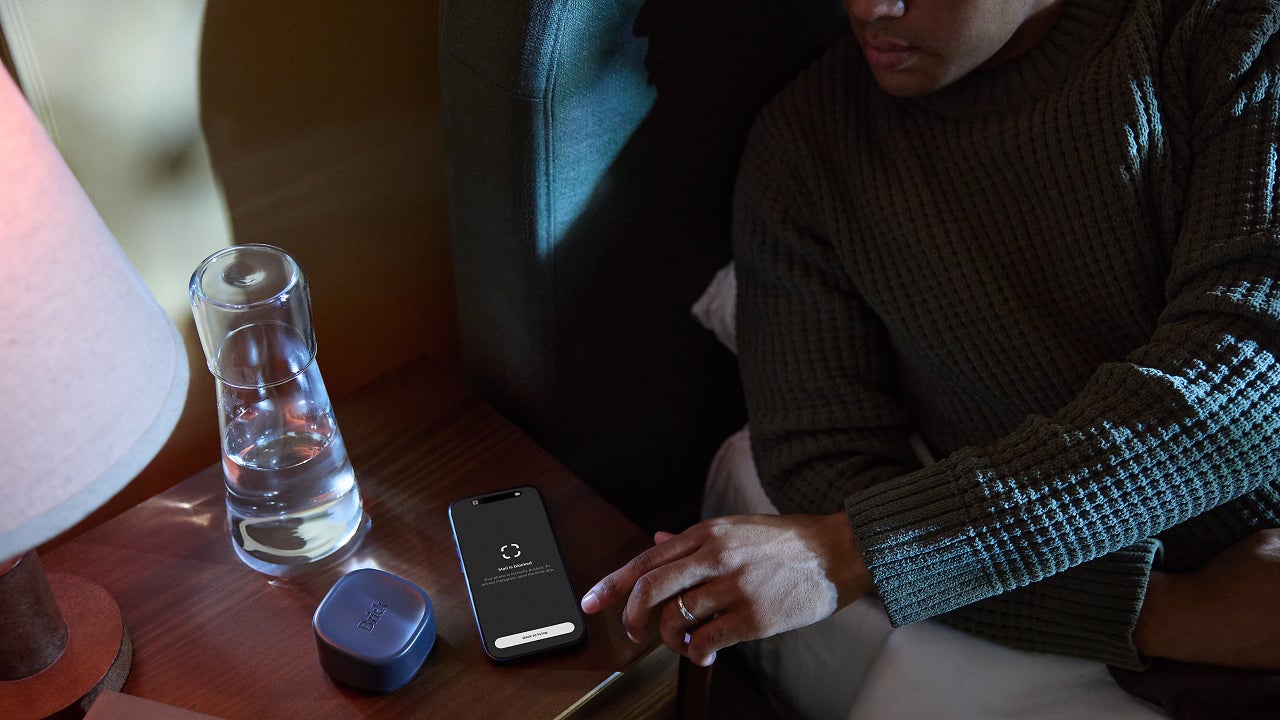
Since it launched in September 2023, Brick—the NFC-enabled productivity tool that lets users tap their phone to block a set list of apps—has become a popular way to get people to limit their screen time. Now, the company wants to bring the simplicity of its flagship product into the bedroom to help people get a good night’s sleep sans smartphone. Brick Night, launched Oct. 22, is only the second product from Brick, and it’s designed to make cutting out smartphone distraction effortless—removing the need to tap your phone at all. “After years of using Brick and talking with the people who use it, we’ve seen that boundaries work best when they’re built into your life,” Brick Co-founder TJ Driver tells Fast Company. “A natural next step was protecting physical spaces, so Brick Night builds on that foundation by automatically blocking distracting apps when you’re in your set space.” Brick Night uses Bluetooth to automatically block apps on a phone when the user enters their bedroom—or whatever room they want to be distraction-free. [Photo: Brick] To set up, users choose a list of apps to be blocked and set a duration for the block. Then, once Brick Night detects their phone nearby, those apps become inaccessible for the chosen amount of time. While the device can automatically lock apps on any room of a user’s choosing, for Driver, focusing on the bedroom was “the clear place to start.” The new device tackles a growing set of issues stemming from phone use in the bedroom. Studies have found that around 87% of Americans sleep with their phones in the bedroom, a habit that can significantly affect sleep quality. Researchers have found that just one hour of phone use in bed can increase the risk of insomnia by 59%. The Brick Night is responding to a desire from users to cut back on that phone time. A Pew Research released in September found that 45% of adults say they’ve tried to reduce their smartphone use in the past year. That’s especially true of people under 50, 58% of whom said they were trying to curb their smartphone use. Forty-one percent said their smartphone hurts the amount of sleep they get. “Our phones do have real uses in the bedroom, like alarms, important calls, and audio to wind down, but they also pull us into work, scrolling, and notifications. Brick Night builds the boundary into the room itself, ” Driver says. “You keep what you need, and you stick to a distraction-free routine every night without having to remember anything.” The new device, which is slightly larger than the original Brick and comes in a midnight blue color, will support multiple users and can cover a space as large as 25 x 25 feet. Brick Night is now available for purchase for $129 on the official Brick website.