

TechCrunch10/23/2026
Startups don’t need to go viral to win customers
At TechCrunch Disrupt last week, two founders and a VC discussed how to not just gain an early following but keep one.
These prices will be locked in through November 2028.
Curated from The Cool Down. Classified as Business & Technology by AI, which sometimes makes mistakes.
At TechCrunch Disrupt last week, two founders and a VC discussed how to not just gain an early following but keep one.
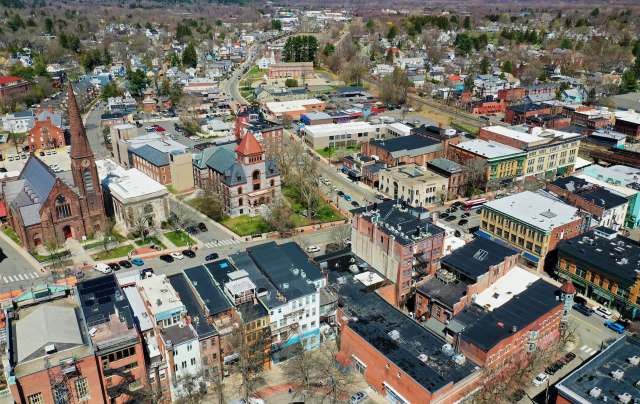
How much do you really know about the world right outside your door? A trending tool has the answers, highlighting all there is to see, do, and discover within a 30-minute walk of your location. On Local Wiki, users can input their location—either directly or through a postal code, town, area, or nearby landmark—and see a color-coded map of every Wikipedia article geotagged within 30 minutes on foot. The so-called “encyclopedia for round here” includes everything from local parks to cultural hot spots and even historical events. If it has a Wikipedia entry, it will show up on the map, and thousands of social media users are already singing the site’s praises. The man behind Local Wiki Local Wiki was created by Scottish designer and writer Neil Scott, whose post sharing the project on X has garnered more than 1.4 million views in just over a day. Forget 15 minute cities, here is everything that is on Wikipedia located within a 30 minute walk of where you are:https://t.co/oRsYGmwehL— Neil Scott (@MrNeilScott) October 22, 2026 Scott tells Fast Company that his version of Local Wiki builds on a concept by his friend Ed Jefferson, who created a more traditional wiki restricted to the Wikipedia articles geotagged within 1.5 miles of a given location. “I’m a visual person, so I wanted to see where all those places sat on a map,” Scott says over email. As a self-described psychogeographer (someone who studies the connection between environments and human behavior) and flâneur (someone who walks through urban settings observing the hustle and bustle around them), Scott takes special interest in the stories of the places around him. He hopes Local Wiki might inspire others to do the same with their own neighborhoods. “The internet shouldn’t be an end in itself; it should help us explore the real world. I love the idea that this might get people outside,” he says. But for those who’d rather stay indoors, he also hopes it inspires more people to contribute to Wikipedia. Given that Local Wiki is entirely based on Wikipedia’s geotagged data, Scott says “the credit really belongs to the editors who wrote those articles.” Scott’s post about Local Wiki is his most successful to date. While most commenters lauded the tool and shared the hidden gems they discovered in their neighborhoods, others complained that there’s little to see on the Local Wiki if you don’t live in a big city. “It became a source of both pride and shame, with people telling the world how much or how little Wikipedia coverage their area has,” Scott says. “I think people also shared it because it’s so simple: a reminder of what the web is like when it isn’t trying to sell you something.”
"We wanted a home that was really comfortable and easy to live in and that's exactly what we've ended up with."