
TechCrunch10/23/2026
Startups don’t need to go viral to win customers
At TechCrunch Disrupt last week, two founders and a VC discussed how to not just gain an early following but keep one.
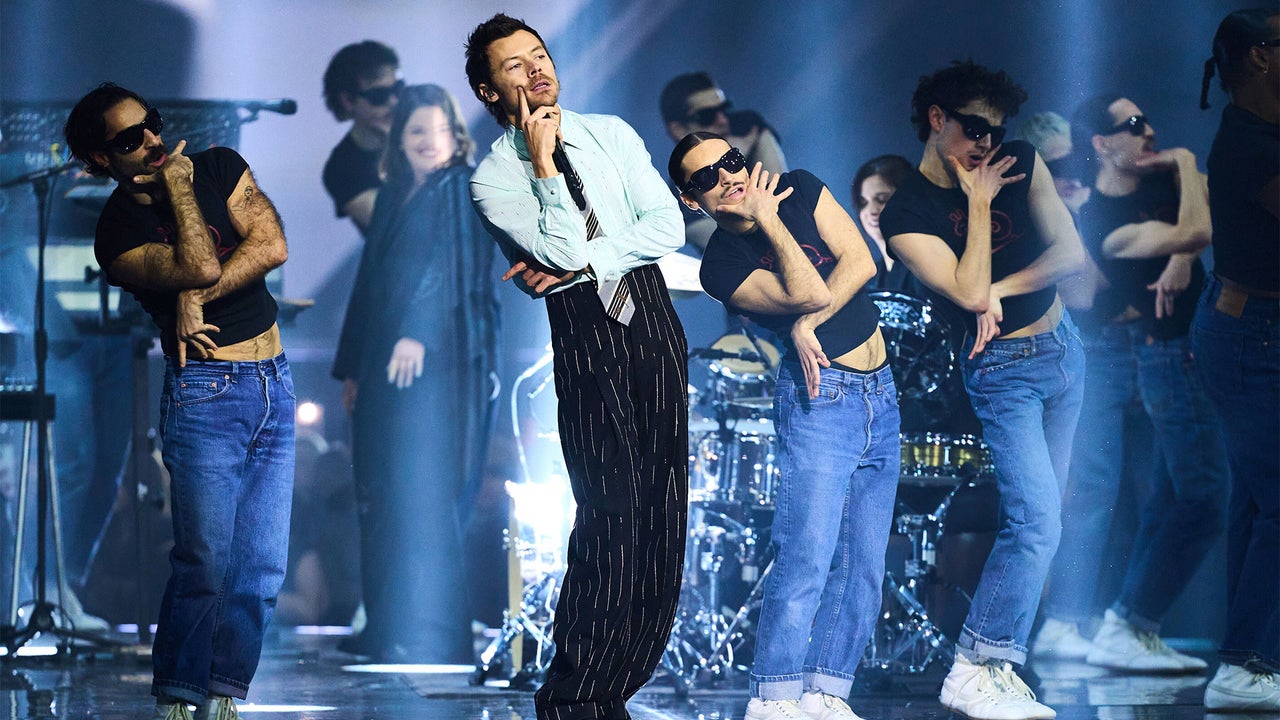
For Harry Styles’ dedicated audience, it is the can’t-miss event of the year: Tens of thousands have descended on New York City’s Madison Square Garden each night of his 30-date residency, rushing to catch the show before it concludes Halloween weekend.The stint follows the artist’s 2022 blockbuster run, when he performed 15 consecutive nights at the famous arena. And he’s not the only one embracing the format. Residencies in Las Vegas, once viewed as the final stop at the end of a long career, have attracted younger performers like Usher, Katy Perry and Lady Gaga. In 2024, Adele embarked on a 10-date Munich residency. And last year, Bad Bunny’s 31-date residency in Puerto Rico single-handedly boosted the island’s fragile economy, generating over $200 million while extending his efforts to elevate the U.S. territory’s global profile.Celine Dion, who holds the record for the highest-grossing residency in Vegas, recently embarked on one just outside Paris. It’s her first concert series since revealing her diagnosis with stiff-person syndrome.Industry insiders and artists alike say there are many reasons why residencies have taken hold in the music business, despite arguments that the format may shift costs to fans who could save money attending a tour in their hometown rather than spending the cash on travel. Residencies fulfill evolving needs Residencies aren’t exactly a novel concept, explains Mitch Rose, Creative Artists Agency’s head of North American touring, who represents artists including Styles and Perry.“Go back in time to early Vegas, in the ’60s when Frank Sinatra had a residency and Tony Bennett had a residency,” he said. “They played multiple shows across a year at a hotel. That was the birth of a residency.”Over time, however, Vegas residencies became synonymous with a particular kind of artist: one close to retiring. That changed in the 2000s, when Dion revitalized the format with her yearslong “A New Day …” and “Celine” runs. John Meglen, co‑CEO of Concerts West, was instrumental in both the Vegas residencies and the one in France.“Most people thought we were crazy,” he said, noting the expense. “It was 200 shows a year, 40 weeks a year. Five shows a week.”But it worked. Across 16 years and 1,141 performances, Dion grossed $681.3 million, according to Billboard.Nowadays, residencies are commonplace. Rose says attendees treat them like festivals: destination experiences.“Think of Coachella,” he says. “People from all around the world come to the desert mid-April to share an experience. And residencies are the same vibe. When we announced Harry’s residency, the Garden was the only place in America that we were playing in 2026. … There’s a uniqueness.”And often, residencies inspire artist pop-up shops and fan meetups, adding to the festival-like atmosphere. Both artists and the industry benefit R&B singer Usher hosted his popular “Usher: My Way The Vegas Residency” in 2022 and 2023, part of a high-profile run that included a 2024 Super Bowl halftime show. At the time, he told The Associated Press that part of the appeal was the consistency.“I like the idea of what I’ve found in Las Vegas. It gives me an opportunity to settle. I have children now. I got a life,” he said.There are clear financial benefits, too. Residencies save on the major expense of transporting production, people and equipment, Meglen said.Another upside? “If you do a residency in one city, you’re not on an airplane or in a bus. It’s good mental healthcare for the artist,” Rose said.Residencies also offer an opportunity to develop massive stage productions that don’t have to be hauled around the world. Nowhere is that more clear than at the 516-foot-wide (157-meter) Sphere in Las Vegas, with its state-of-the-art technological attractions and high-resolution LED screen that wraps halfway around a 17,500-seat audience.In 2026, Carín León became the first Latino artist to hold a residency there. “It’s a venue that lets you express a lot of stuff because of all of the tools,” he said. “For me, it was perfect.” Some say residencies shift expenses to the fans Styles’ New York audience spends anywhere from under $100 to $1,000 to attend, not counting the cost of travel for out-of-towners.“I understand why residencies make sense for an artist and why it would be less stressful and make their lives easier. But as a fan, I don’t understand how they cost as much money as they do,” said Sara Feigin, a Styles fan and New York-based photographer. “You’re playing over 30 days at the same venue, why is this $300?”She believes that if residencies are more affordable for talent, tickets should be cheaper too.A representative for Styles declined to comment.For Ticketmaster events like Styles’ residency, the base price for a ticket before various fees and taxes (or the “face value” cost) is determined by the event organizer.Meglen says it’s crucial that traditional touring continue, but there’s room for both: Residencies give “all these other markets a breather,” as he puts it, in turn creating future demand. “I don’t know any artist that keeps touring over and over and over in the same markets that their ticket sales go up.” Residencies can be found all over the globe Where a residency takes place depends on the artist. Consider Bad Bunny. “Nobody could do what he did in Puerto Rico, right?” said Rose. “Major markets are always going to be the first choices of residencies. … And I don’t think every city works.”As for Dion, “Paris is Celine’s biggest market in the world,” says Meglen.Otherwise, entertainment capitals with many large venues like Los Angeles, Las Vegas and New York top the list. And fans who live far from these locations should expect to travel, because residencies don’t appear to be going anywhere.“Everything is cyclical and the residencies are certainly having a moment,” said Rose. “And as long as there’s a Las Vegas or an act big enough to do multiple nights in arenas, it will never go away.” —Maria Sherman, AP Music Writer
Curated from Fast Company. Classified as Business & Technology by AI, which sometimes makes mistakes.
At TechCrunch Disrupt last week, two founders and a VC discussed how to not just gain an early following but keep one.
How much do you really know about the world right outside your door? A trending tool has the answers, highlighting all there is to see, do, and discover within a 30-minute walk of your location. On Local Wiki, users can input their location—either directly or through a postal code, town, area, or nearby landmark—and see a color-coded map of every Wikipedia article geotagged within 30 minutes on foot. The so-called “encyclopedia for round here” includes everything from local parks to cultural hot spots and even historical events. If it has a Wikipedia entry, it will show up on the map, and thousands of social media users are already singing the site’s praises. The man behind Local Wiki Local Wiki was created by Scottish designer and writer Neil Scott, whose post sharing the project on X has garnered more than 1.4 million views in just over a day. Forget 15 minute cities, here is everything that is on Wikipedia located within a 30 minute walk of where you are:https://t.co/oRsYGmwehL— Neil Scott (@MrNeilScott) October 22, 2026 Scott tells Fast Company that his version of Local Wiki builds on a concept by his friend Ed Jefferson, who created a more traditional wiki restricted to the Wikipedia articles geotagged within 1.5 miles of a given location. “I’m a visual person, so I wanted to see where all those places sat on a map,” Scott says over email. As a self-described psychogeographer (someone who studies the connection between environments and human behavior) and flâneur (someone who walks through urban settings observing the hustle and bustle around them), Scott takes special interest in the stories of the places around him. He hopes Local Wiki might inspire others to do the same with their own neighborhoods. “The internet shouldn’t be an end in itself; it should help us explore the real world. I love the idea that this might get people outside,” he says. But for those who’d rather stay indoors, he also hopes it inspires more people to contribute to Wikipedia. Given that Local Wiki is entirely based on Wikipedia’s geotagged data, Scott says “the credit really belongs to the editors who wrote those articles.” Scott’s post about Local Wiki is his most successful to date. While most commenters lauded the tool and shared the hidden gems they discovered in their neighborhoods, others complained that there’s little to see on the Local Wiki if you don’t live in a big city. “It became a source of both pride and shame, with people telling the world how much or how little Wikipedia coverage their area has,” Scott says. “I think people also shared it because it’s so simple: a reminder of what the web is like when it isn’t trying to sell you something.”
"We wanted a home that was really comfortable and easy to live in and that's exactly what we've ended up with."