

TechCrunch10/23/2026
Startups don’t need to go viral to win customers
At TechCrunch Disrupt last week, two founders and a VC discussed how to not just gain an early following but keep one.
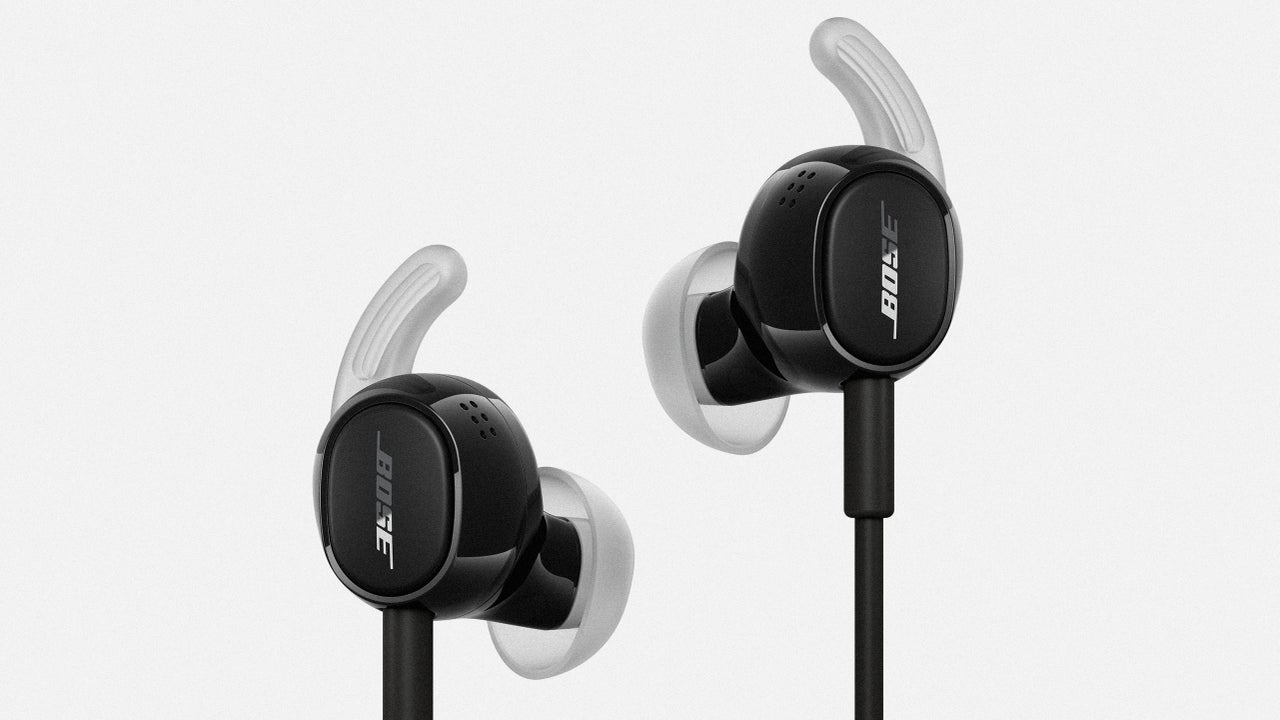
Last fall, Raza Haider, president of premium consumer audio at Bose, noticed something peculiar when dropping his daughter off at college: more students were wearing wired headphones than he’d seen in recent years. “Even [my daughter] made a comment like, ‘this is nuts. When I was in high school, we would have made fun of kids who had wired headphones, and now it feels like all the cool kids have them,’” Haider says. There’s a rift from Bluetooth headphones underway that isn’t just anecdotal. Sales increased 15% year-over-year from 2025 to 2026, totaling $354 million in 2026 according to data from market research company Circana. That might not seem very high, but in the context of the broader, usually mostly flat-growth headphone market, it’s pretty noteworthy, says Paul Gagnon, VP and industry advisor for consumer technology at Circana. “If you look at the last six or seven years, wired headphones had been declining. Consumers had shown preference for wireless, especially earbud style, like Apple’s AirPods,” Gagnon says. “We started to see the wired headphone category return to growth last year.” When Bose released its noise-canceling wired earbuds—its first wired audio product in 11 years—in late September, pre-orders for the $99 headphones sold out two months’ worth of stock in less than 24 hours. The company says this “overwhelming demand” has caused subsequent stock availabilities to quickly sell out as well. Excitement for the new headphones, which shipped Oct. 15, underscores a renaissance happening in headphones. Bluetooth may have dominated for years as the hands-free way to listen to music, with active noise cancellation becoming standard for many. But it brought with it a suite of things to worry about, including charging the headphones and locating them if they aren’t in their case. As nostalgic cords come back into the limelight, Bose found a way to combine the best of both worlds. [Photo: Bose] Why wired? According to Gagnon, wired headphone sales stopped dropping in August 2025. Since then, wired headphone sales have grown every month. The shift happened against the backdrop of a particularly tough economy. “Some of it may be cost related. The average price of a pair is $12,” Gagnon says. Though the interest in Bose’s relatively pricey pair of Noise Cancelling Wired Earbud headphones may speak to a desire for premium wired products, the top five brands—Apple, Sony, JLab Audio, Sennheiser, and Skullcandy—mostly come in under $20. But there’s also a convenience factor in a world where people own an average of 3.6 devices per person—data from the UN Conference on Trade and Development that didn’t even include headphones. “People are starting to realize the downsides of a lot of our modern technology systems. Generally, they’re getting fatigued,” Taylor Lorenz, independent technology journalist and User Magazine founder, tells Fast Company. “Wired headphones don’t die. They’re easy to find. You can’t lose one; they’re attached to each other. There are a lot of upsides to them.” One of those upsides: an inline mic. When Lorenz isn’t talking into a podcast mic, there’s often a headphone wire dangling from ear with the mic visible, a common sight among content creators on TikTok and Instagram. Wired headphones have also become a common sight on celebrities going about their day, or as part of interviews (Dua Lipa for Vogue), music videos (Role Model and Addison Rae), and ad campaigns (Sabrina Carpenter for Skims). Haider says the pop culture moment showed that “Wired earbuds were becoming part of culture again.” Carpenter in particular was an inspiration for the Bose project. Internally, Haider says, the company “adopted ‘Sabrina’ as its codename,” the president says. [Photo: Bose] Once again a statement piece At the height of iPod mania, the portability of music became synonymous with the company’s wired headphones. The early ads with dancing silhouettes that emphasized the white headphones turned them into iconic accessories. Twenty-five years since the introduction of Apple’s earbuds (branded these days as EarPods), wired headphones are now an aesthetic preference rather than a necessity, especially as people increasingly wear early-2000s tech as an embellishment. “Tech accessories are very popular, whether they’re bag charms or barrettes or jewelry,” Lorenz says. “People are getting creative with retro technology. It reminds me of them using the iPod Nano as a hair clip.” Some folks are even decorating their headphone cords. Given the retro appeal, it might seem fair to think Gen Z, which has been visibly driving the trend, is leading it, but it’s actually millennials who lead wired headphone purchases. “They also overindex in households with children,” says Gagnon. “If you think about a 35- to 44-year-old, that’s the typical age of a young parent or a parent of young kids, so maybe they’re buying them for their kids.” [Photo: Bose] Nostalgia, with an upgrade The shift to corded headphones—happening concurrently with the resurgence of “retro-tech” trends, like point-and-shoot cameras—underscores nostalgia as a powerful influence on consumers right now. “Newer isn’t necessarily better. A lot of our technology is actually making our lives worse for no reason,” Lorenz says, pointing to people going back to analog, be it iPod Nanos or film cameras. But like newer digital point-and-shoots, which are using flash memory to improve on the original product, the strong performance of Bose’s new product shows interest in upgrades that borrow from now-standard features of high-tech products. The newly released headphones are noise-cancelling, which is a pretty unique feature for corded headphones, and represent an upgrade on an older model of Bose’s wired earbuds. On its original noise-cancelling earbuds—which cost three times as much as the new ones—noise cancelling could “only be delivered through wires because it required that much battery life,” Haider says. “There was actually a big battery pack on the product itself because it needed to be charged and then plugged into the jack of your phone,” Haider says. With the new product, Haider says Bose rethought how it would bring noise cancellation, a fairly standard feature today, into a “form factor that people are really yearning for.” So, rather than a battery pack, Bose’s 2026 wired headphones draw power from the phone itself to fuel the noise cancelling feature. In the old days, technology was the star of the show when it came to product design, Haider says. Now, since many technologies are pretty advanced, consumer satisfaction comes more from how things are configured and built. “We had to quickly unlearn that wireless is not the only answer, and wired is not just something of the past,” he says.
Curated from Fast Company. Classified as Business & Technology by AI, which sometimes makes mistakes.
At TechCrunch Disrupt last week, two founders and a VC discussed how to not just gain an early following but keep one.
How much do you really know about the world right outside your door? A trending tool has the answers, highlighting all there is to see, do, and discover within a 30-minute walk of your location. On Local Wiki, users can input their location—either directly or through a postal code, town, area, or nearby landmark—and see a color-coded map of every Wikipedia article geotagged within 30 minutes on foot. The so-called “encyclopedia for round here” includes everything from local parks to cultural hot spots and even historical events. If it has a Wikipedia entry, it will show up on the map, and thousands of social media users are already singing the site’s praises. The man behind Local Wiki Local Wiki was created by Scottish designer and writer Neil Scott, whose post sharing the project on X has garnered more than 1.4 million views in just over a day. Forget 15 minute cities, here is everything that is on Wikipedia located within a 30 minute walk of where you are:https://t.co/oRsYGmwehL— Neil Scott (@MrNeilScott) October 22, 2026 Scott tells Fast Company that his version of Local Wiki builds on a concept by his friend Ed Jefferson, who created a more traditional wiki restricted to the Wikipedia articles geotagged within 1.5 miles of a given location. “I’m a visual person, so I wanted to see where all those places sat on a map,” Scott says over email. As a self-described psychogeographer (someone who studies the connection between environments and human behavior) and flâneur (someone who walks through urban settings observing the hustle and bustle around them), Scott takes special interest in the stories of the places around him. He hopes Local Wiki might inspire others to do the same with their own neighborhoods. “The internet shouldn’t be an end in itself; it should help us explore the real world. I love the idea that this might get people outside,” he says. But for those who’d rather stay indoors, he also hopes it inspires more people to contribute to Wikipedia. Given that Local Wiki is entirely based on Wikipedia’s geotagged data, Scott says “the credit really belongs to the editors who wrote those articles.” Scott’s post about Local Wiki is his most successful to date. While most commenters lauded the tool and shared the hidden gems they discovered in their neighborhoods, others complained that there’s little to see on the Local Wiki if you don’t live in a big city. “It became a source of both pride and shame, with people telling the world how much or how little Wikipedia coverage their area has,” Scott says. “I think people also shared it because it’s so simple: a reminder of what the web is like when it isn’t trying to sell you something.”
"We wanted a home that was really comfortable and easy to live in and that's exactly what we've ended up with."