

TechCrunch10/22/2026
OpenAI working on new $30B raise at $1.25T valuation ahead of IPO
Should OpenAI command an over $1 trillion valuation with this round, it would break records as the most highly valued private company ever.
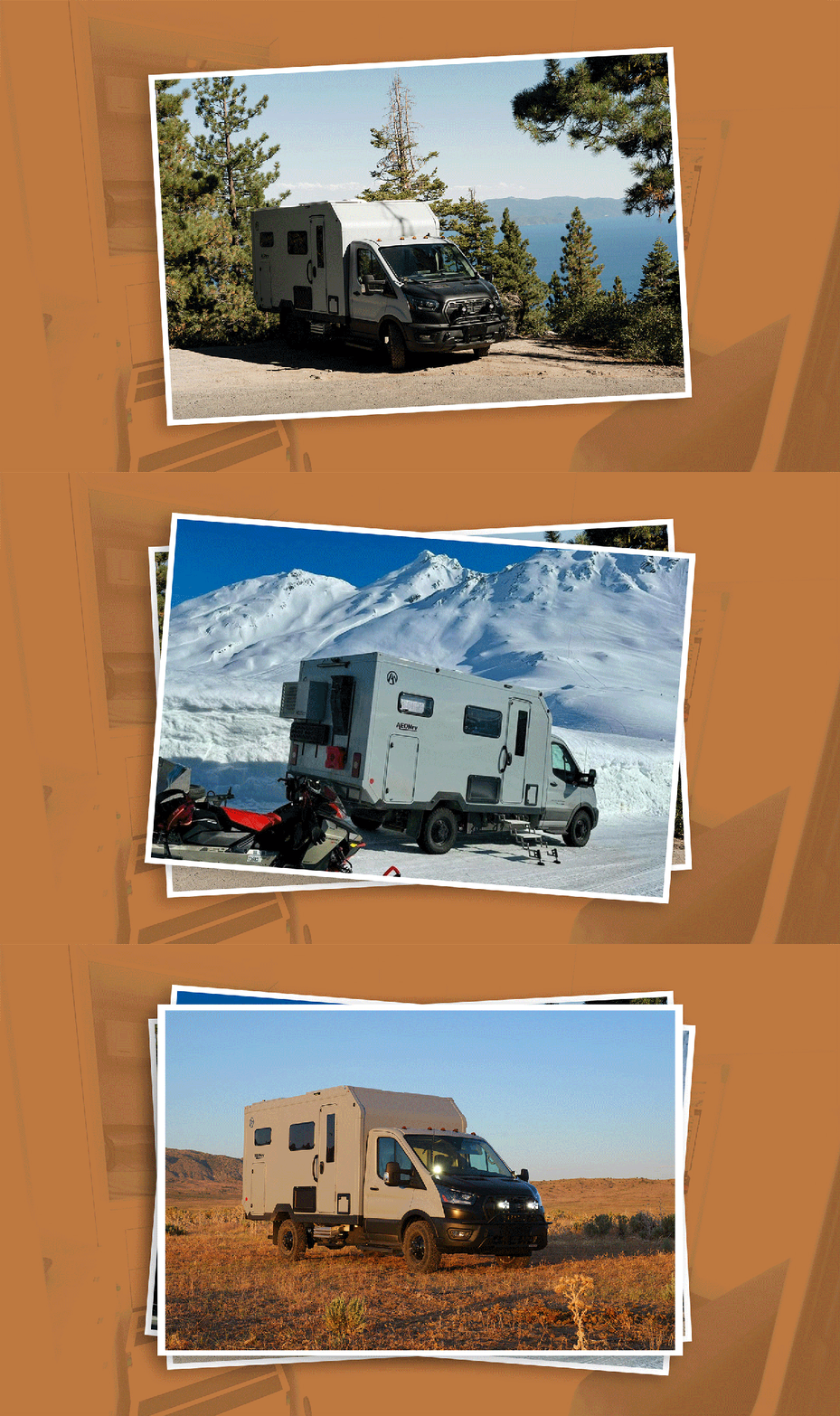
Jim Ritchie started AEONrv, a Nevada-based company that sells a high-tech hybrid RV, because he wanted to create a new kind of vehicle for himself to use. The result is an RV with a modern, all-electric cabin mounted on the chassis of a gas-burning Ford Transit van. The company’s growth has been strong enough to land it at No. 66 on the Inc. 5000 list this year, with a three-year growth rate of 4,231 percent. And it has managed to pull off this growth while the overall RV industry has declined from a Covid-era high. Ritchie, a software engineer, says pondering his own outdoor adventures jump-started the creation of the company. “I’m a big skier, and I was thinking maybe I’ll retire sometime soon, and it’d be cool to have a vehicle to take to go skiing and biking and things I like to do,” he says. “I was looking around at vans. Van life was big, and I didn’t really like what was going on there. They seemed hard to insulate.” All told, he says, the traditional RV industry “seemed pretty old-school” to him. Ritchie designed the vehicle for fun, and to help make it a reality, teamed up with a friend, Lars Severin, who became the company’s CTO (Severin retired earlier this year). What began as a weekend project grew into a business. By the end of 2021, they had published a website and started taking deposits for the vehicles. “We hired our first employee a little over four years ago,” he says, “and the rest is history.” They bootstrapped the company to get it off the ground, and then raised under $2 million of outside capital from investors in 2023 and 2024. The vehicle boasts a tech-forward design centered on a snugly insulated, all-electric cabin. Solar panels on the roof generate electricity, which is stored in lithium-ion batteries. Starlink provides an internet connection. Ritchie emphasizes that inspiration for the build came from the marine industry, and that the cabin is built out of fiberglass-reinforced insulated panels. “There’s no aluminum or metal in the actual build,” he says. “It’s all composites and fiberglass, and it’s all glued together.” There’s also no propane, which traditional RVs use for appliances like stoves and even historically as a power source for refrigerators. The result is an energy-efficient cabin that’s so airtight, Ritchie says, occupants “have to crack a window at night, so you don’t get carbon monoxide poisoning.” The company, which employs some 60 full-time employees, has delivered more than 150 vehicles in total through its direct-to-consumer approach, the same way EV companies Tesla and Rivian sell their rides. They deliver about eight vehicles each month, with the starting price for the base model at $229,500. Ritchie predicts that the company’s 2026 revenue will land around $20 million; he says the company was profitable as of last year and remains on track to turn a profit this year as well. AEONrv remains a niche, if tech-forward, player in a $159 billion industry with three big companies: THOR Industries (companies under its umbrella include Airstream and CrossRoads), Forest River, and Winnebago Industries. Those companies “make up the bulk of the RV production in the United States,” says Monika Geraci, a spokesperson for the RV Industry Association. Not only that, 88 percent of RVs last year were made in one state: Indiana. RV shipments in the U.S. spiked in 2021 amid the Covid pandemic, hitting a high of 600,241 that year, according to the RV Industry Association. Then they fell. Shipments from manufacturers to dealers last year were 342,220, a drop of about 43 percent from that Covid-era high. Geraci says that current estimates hold that RV production in the U.S. will drop by about 8 percent this year compared with last. She attributes the decline to economic factors. “For people who own RVs, we see them use them more because it is a more economical way to travel,” she says, compared with flying and staying in a hotel. But she says that “economic uncertainty” and factors like interest rates and inflation are “keeping a lot of people who want to purchase an RV on the sidelines.” If you’re picturing a motorhome like a bus when you think of an RV, that type of vehicle is actually in the minority of RV sales. Last year, nearly 90 percent of RVs shipped were the towable kind. In fact, Ritchie says that they’re working on a towable version of their product that will cost less than $100,000. Besides AEONrv, other players in the electric RV space include Lightship, which sells an electric trailer called the AE.1 that can lower to become sleeker on the road; and Pebble makes the Pebble Flow, which is also an electric RV trailer. Pebble said in July that it had delivered more than 100 of its trailers. Lightship declines to share how many units it’s delivered, but notes that it started shipping production vehicles late last year and has already sold all the vehicles it plans to build between this summer and next. The products from both Lightship and Pebble embrace a tech-forward, spaceship-like design for their trailers. As for the appeal of an RV with an electric cabin, Geraci notes that “there is an RV for every lifestyle and every price point, and so this is another option that is out there. I don’t foresee the RV industry going all electric.” Jason Epperson, a longtime RVer who hosts a podcast and YouTube channel called RV Miles along with his wife, Abby Epperson, says that startups like AEONrv are “all trying to do something a little bit different from what the traditional Indiana RV industry has done.” As for those traditional RVs, Ritchie is blunt about what he thinks about their appearance: “They look like 1980s Vegas or something.” —Rob Verger This article originally appeared on Fast Company’s sister website, Inc.com. Inc. is the voice of the American entrepreneur. We inspire, inform, and document the most fascinating people in business: the risk-takers, the innovators, and the ultra-driven go-getters that represent the most dynamic force in the American economy.
Curated from Fast Company Technology. Classified as Business & Technology by AI, which sometimes makes mistakes.
Should OpenAI command an over $1 trillion valuation with this round, it would break records as the most highly valued private company ever.
The next competitive advantage in enterprise AI has less to do with which model you choose than with what you build around it. That’s an important shift. For the past several years, much of the AI conversation has centered on model capability: bigger models, better reasoning, larger context windows, higher benchmark scores. Those advances have…
While longevity may be the buzzword du jour in the wellness industry right now, the sorts of advancements initially targeted toward enhancing the performance of elite athletes could also help improve the quality of life of ordinary people. Take cleats, for example. Many of us probably haven’t laced up a pair since our youth soccer days, but since shaking up the sports world last year with its injury-reducing smart cleats, Caddix is eyeing the opportunity to pivot and begin designing everyday footwear that could benefit the rest of us. So often the focus on footwear advancements is related to enhancing performance, but that doesn’t necessarily translate to people who spend many hours on their feet—even if it’s not on a sports field. “The emphasis needs to be put on longevity as it relates to wear and tear,” Jack Rasmussen, founder and CEO of Caddix, said at a Fast Company World Changing Ideas panel discussion at the Johns Hopkins University Bloomberg Center on Wednesday. That’s true even of products that weren’t initially designed with professional athletes in mind. Panelist Jason Wersland, a chiropractor, came up with the idea for the Theragun out of necessity to deal with the pain he experienced in the wake of a motorcycle accident. Over the years, the Therabody founder has seen firsthand how “highly motivated” professional athletes incorporate his company’s tools into their recovery process—information that’s valuable when thinking about how to help someone dealing with more routine pain, like a headache, Wersland said. “If I can change an athlete’s behavior, I can probably change every person’s if I’m in front of them long enough with the right information,” he said. Dealing with data fatigue But there’s also a balance to be struck in terms of what information—and how much—to provide to people. The growing market of wearable tech gadgets often details a bunch of information that can lead to data fatigue and doesn’t actually address the root problem, said Harry Gestetner, founder and CEO of Orion Sleep. That’s what led Gestetner to design a passive product—an AI-enabled mattress cover—when he got serious about trying to improve his sleep in the wake of being diagnosed with an inner ear condition several years ago. While wearables have helped people to better understand what’s happening with their bodies, innovation shouldn’t end there, he said. “The next innings [are] the intervention layer where we can actually take that data and do cool stuff with it,” Gestetner said. “We use AI to understand what your body does throughout the night and adjust your body temperature to the perfect temperature.” What athletes teach us about pain Just as advancements in health-tech products are finding broader use cases that could extend longevity, so too could they broaden our understanding of how human bodies recover from injury. As she’s aged, Haleigh Washington, a two-time Olympic medalist for the Team USA women’s volleyball team, has come to better appreciate what her body is telling her. And what’s particularly helped is becoming more adept at identifying pain that’s manageable versus pain that’s a problem, she said. “When pain’s language starts to change, you recognize that you’re looking at a more serious problem,” Washington said during a separate panel discussion at the same event. Having undergone four knee surgeries, she’s now focused on preventing future injuries by warming up a full two hours before team practice begins. While that might seem excessive, a good warm-up can do wonders to prevent pain down the road, advised Claire Thompson, a fellow Olympian who competed with the Team Canada women’s ice hockey team and now is a third-year medical student at New York University’s Grossman School of Medicine. “Your workout will be better, you will be able to train for longer, and you will take less time off being injured if you just take the 10 minutes at the beginning to get your body ready,” Thompson said. “It will save you hours at physical therapy in the long run.”