

TechCrunch10/22/2026
OpenAI working on new $30B raise at $1.25T valuation ahead of IPO
Should OpenAI command an over $1 trillion valuation with this round, it would break records as the most highly valued private company ever.
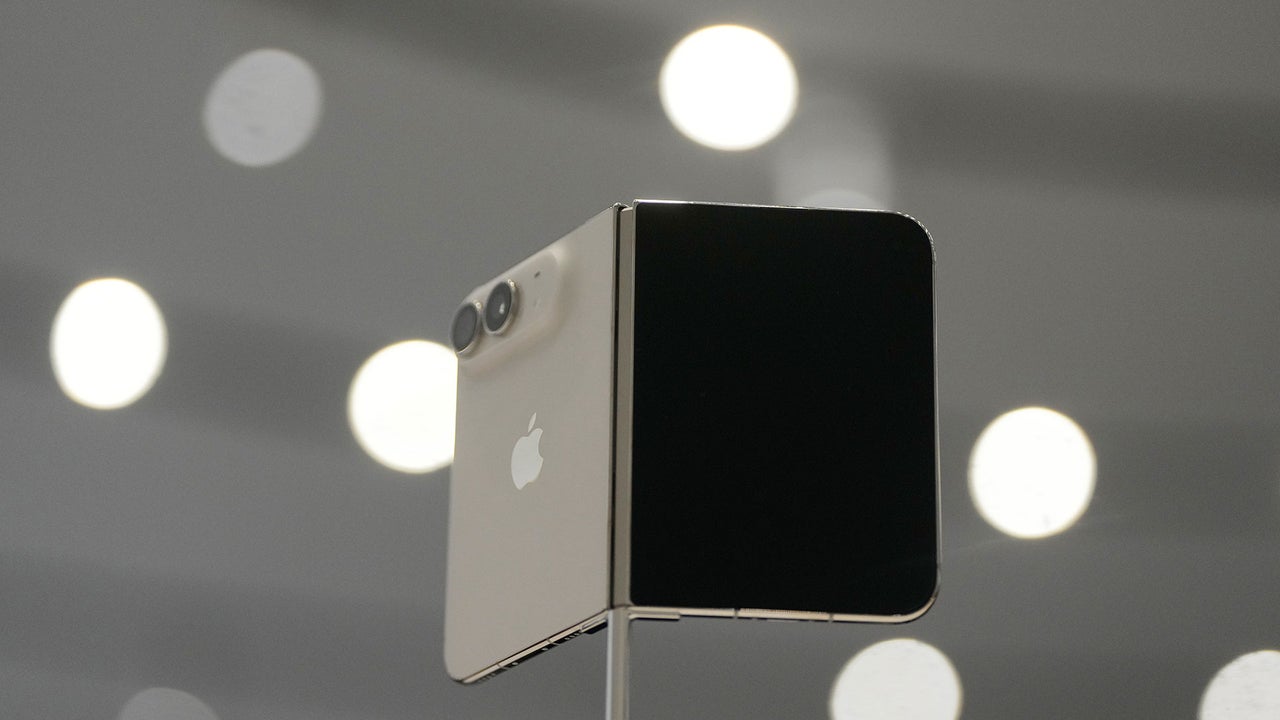
Apple’s first folding phone arrives in stores on Friday, bringing the advantages of a flexible display to iPhone loyalists. Such devices also have their own unique care and protection considerations.Folding screen phones have their upsides. Owners can have a pocket-size device that expands into a bigger seamless screen and can also act as its own stand or tripod. But the technology also requires a bit more attention than a traditional smartphone.Many users have reported shipping dates for preorders of the Duo are slipping into January, so buyers could face delays.Apple hasn’t posted any online information yet on how to take care of the Duo, and the company didn’t respond to a request on whether it plans to. But rival phone makers like Samsung and Google that have been making folding devices for years have put out guidance on caring for the devices.Here’s a look at what they advise: Should you get a screen protector? It depends Owners of traditional smartphones know it’s wise to get a screen protector to minimize damage to the glass.For folding phones, it’s a little more complicated. The Duo, like many other folding phones, has both a rigid outer screen that doesn’t fold and a main folding inner screen. Protectors for the Duo’s outer screen are already available from Amazon and other retailers.But it’s different for the main display. Samsung already adds a protective layer to the inner screen on its Galaxy Fold phones and Google does the same for its folding Pixel devices.Google warns against removing or peeling back the pre-installed screen protector or adding your own. “Do not apply a third-party screen protector,” it says. Samsung advises taking its devices to a service center if the layer needs replacing.Apple appears to be taking a similar tack with the Duo.A company executive told an Italian influencer that the Duo will have a replaceable cover layer on the folding screen. “It’s actually replaceable, which is a really nice thing for the customer, that you can peel off that layer and get a new one,” Kate Bergeron, Apple’s vice president of hardware engineering, said in a video interview with the influencer.In apparent confirmation, a tech YouTuber found that AppleCare’s service price list for the Duo phone lists a “cover layer” for $19.Apple’s press office didn’t respond to a request to confirm these details.But do remember to get a protective case. They’re available from Apple and aftermarket manufacturers. Avoid the beach The main weak point of a folding phone is the hinge.Hardware makers have come up with sophisticated mechanisms that allow phones to open and close, but these hinges still have tiny gaps that are vulnerable to debris.“Don’t take it to the beach — they don’t like sand,” said Ben Wood, a tech analyst at FDM CCS Insight.Chinese phone brand Honor says in online guidance that the rotating hinge on its folding phones “has small gaps that can allow sand and dust to enter.”“These particles can cause damage to the screen and the hinge mechanism, leading to abnormal noises and potential malfunctions,” it says, and recommends not using the phone when it’s windy or dusty.If a phone starts making unusual noises when folding, it’s best not to open or close it anymore because it could be a sign that grit has gotten into the mechanism. Be careful when closing Folding screens are softer and more flexible than standard smartphone screens. That also makes them more vulnerable.Google recommends avoiding contact with “crumbs, fingernails and sharp objects.”Samsung advises making sure there’s nothing between the screens like a card, a coin or a key that could “scratch or puncture the main screen.”Folding phones typically have strong magnets on their edges to keep the screen closed, which will also attract anything metallic that can damage the screen.You might even consider — as some device makers recommend — not keeping the phone in the same pocket or bag as your keys or coins. A few other final tips Don’t bend the phone backward or use too much force when opening or closing it.Honor, which sells phones everywhere but North America, recommends not opening or closing its phones when it’s very cold, because the screen can become brittle and crack more easily. And the company advises not leaving it closed for a long time, which can put stress on the screen and hinge.And, of course, you should still follow general smartphone cleaning and maintenance practices to help your device last as long as possible. Is there a tech topic that you think needs explaining? Write to us at onetechtip@ap.org with your suggestions for future editions of One Tech Tip. —Kelvin Chan, AP Business Writer
Curated from Fast Company Technology. Classified as Business & Technology by AI, which sometimes makes mistakes.
Should OpenAI command an over $1 trillion valuation with this round, it would break records as the most highly valued private company ever.
The next competitive advantage in enterprise AI has less to do with which model you choose than with what you build around it. That’s an important shift. For the past several years, much of the AI conversation has centered on model capability: bigger models, better reasoning, larger context windows, higher benchmark scores. Those advances have…
While longevity may be the buzzword du jour in the wellness industry right now, the sorts of advancements initially targeted toward enhancing the performance of elite athletes could also help improve the quality of life of ordinary people. Take cleats, for example. Many of us probably haven’t laced up a pair since our youth soccer days, but since shaking up the sports world last year with its injury-reducing smart cleats, Caddix is eyeing the opportunity to pivot and begin designing everyday footwear that could benefit the rest of us. So often the focus on footwear advancements is related to enhancing performance, but that doesn’t necessarily translate to people who spend many hours on their feet—even if it’s not on a sports field. “The emphasis needs to be put on longevity as it relates to wear and tear,” Jack Rasmussen, founder and CEO of Caddix, said at a Fast Company World Changing Ideas panel discussion at the Johns Hopkins University Bloomberg Center on Wednesday. That’s true even of products that weren’t initially designed with professional athletes in mind. Panelist Jason Wersland, a chiropractor, came up with the idea for the Theragun out of necessity to deal with the pain he experienced in the wake of a motorcycle accident. Over the years, the Therabody founder has seen firsthand how “highly motivated” professional athletes incorporate his company’s tools into their recovery process—information that’s valuable when thinking about how to help someone dealing with more routine pain, like a headache, Wersland said. “If I can change an athlete’s behavior, I can probably change every person’s if I’m in front of them long enough with the right information,” he said. Dealing with data fatigue But there’s also a balance to be struck in terms of what information—and how much—to provide to people. The growing market of wearable tech gadgets often details a bunch of information that can lead to data fatigue and doesn’t actually address the root problem, said Harry Gestetner, founder and CEO of Orion Sleep. That’s what led Gestetner to design a passive product—an AI-enabled mattress cover—when he got serious about trying to improve his sleep in the wake of being diagnosed with an inner ear condition several years ago. While wearables have helped people to better understand what’s happening with their bodies, innovation shouldn’t end there, he said. “The next innings [are] the intervention layer where we can actually take that data and do cool stuff with it,” Gestetner said. “We use AI to understand what your body does throughout the night and adjust your body temperature to the perfect temperature.” What athletes teach us about pain Just as advancements in health-tech products are finding broader use cases that could extend longevity, so too could they broaden our understanding of how human bodies recover from injury. As she’s aged, Haleigh Washington, a two-time Olympic medalist for the Team USA women’s volleyball team, has come to better appreciate what her body is telling her. And what’s particularly helped is becoming more adept at identifying pain that’s manageable versus pain that’s a problem, she said. “When pain’s language starts to change, you recognize that you’re looking at a more serious problem,” Washington said during a separate panel discussion at the same event. Having undergone four knee surgeries, she’s now focused on preventing future injuries by warming up a full two hours before team practice begins. While that might seem excessive, a good warm-up can do wonders to prevent pain down the road, advised Claire Thompson, a fellow Olympian who competed with the Team Canada women’s ice hockey team and now is a third-year medical student at New York University’s Grossman School of Medicine. “Your workout will be better, you will be able to train for longer, and you will take less time off being injured if you just take the 10 minutes at the beginning to get your body ready,” Thompson said. “It will save you hours at physical therapy in the long run.”