
The Cool Down10/20/2026
From Alaska through Canada, an F-150 Lightning towed 6,000 pounds, and the generator stayed idle
"Worst part of the frequency of charging was unhooking and rehooking the trailer."
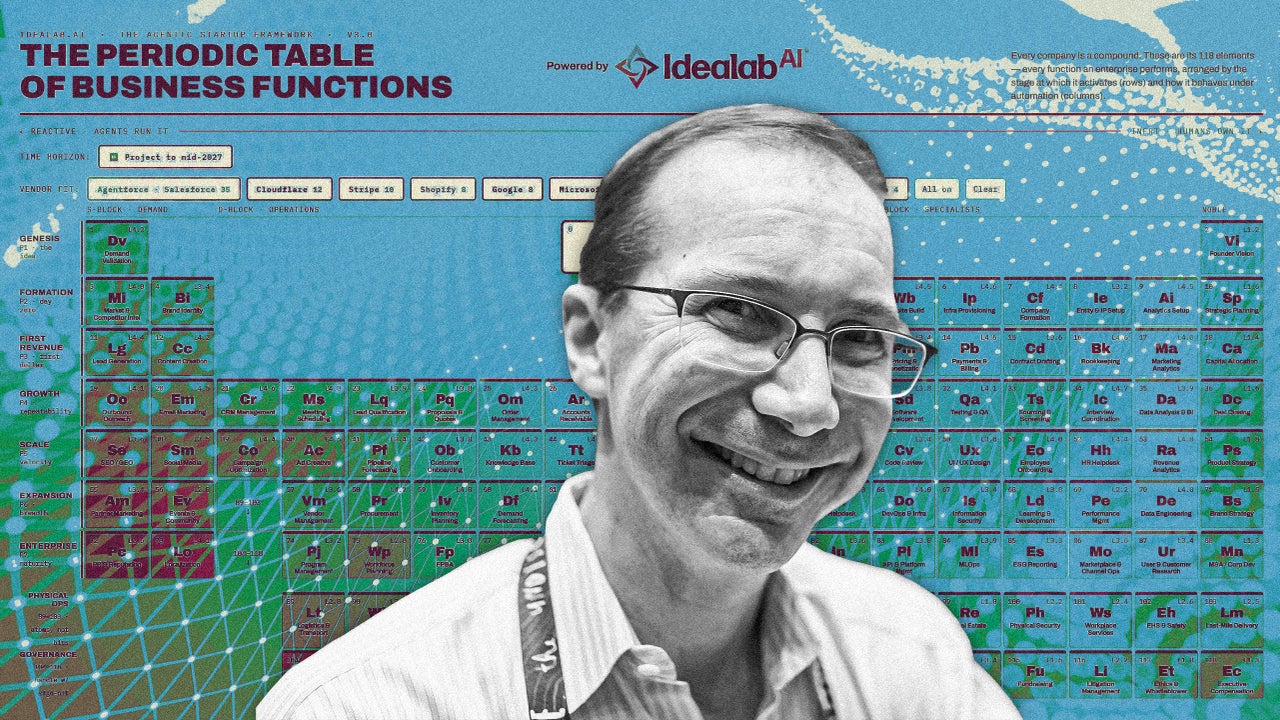
For decades, the entrepreneur and investor Bill Gross has been celebrated for shaping the way tech businesses get off the ground. Idealab, which he founded in 1996, is considered the industry’s longest-running tech incubator; the directory of companies it’s backed—including CitySearch, Coinbase, Picasa, and Twilio—doubles as a museum of ever-shifting trends in logo design. Over the years, he’s also founded businesses in fields ranging from internet advertising to clean energy. “My whole life, I’ve been looking at the world, seeing problems, and trying to start companies to solve them,” Gross says. And for him, finding problems in search of a solution has typically involved extensive reading, including most of the major finance and tech publications. Recently, while reading an article about copper shortages, Gross reflected on how much of what he reads contains some sort of implicit problem statement and wondered how artificial intelligence might fare at generating business ideas based on news reporting. In an initial test, Gross supplied Anthropic’s Claude with about 7,000 articles he had recently read, along with material he had put together about coming up with business ideas. “It came back with 32,000 company ideas, and they were incredible ideas,” he says. “They blew my mind at how good they are.” At first, Gross wondered whether that meant the technology would make his role of finding exciting new business ideas obsolete. But instead, he realized, it meant AI could help further his longstanding goals of solving more problems at scale. And when he expanded the dataset provided to the AI, including documents like expired patents, SEC filings, consumer complaints from social media, and plenty of material from science publications, the AI system was able to generate a database of more than 1 million ideas. “I’ve got a database of 1.2 million ideas that basically solve pretty much every world problem because it was trained by reading every world problem,” he says. Gross intends to keep updating that database with the help of AI, and his plan is to make it available to anyone looking to start a company. Would-be entrepreneurs, Gross announced on October 19, can search the database for projects that match their interest and skillset, filtering based on notions of how much investment a particular idea might require, how much of the business can be automated with current technology, and whether there are any geographical constraints. In addition, Gross is putting together funding designed to back entrepreneurs around the world starting a business based on one of the ideas. He’s doing this through a new venture he calls Idealab.ai. The organization indicates it expects to launch that side of the program by the end of 2026 and hopes, in the long term, to help connect founders from around the world with $100 million in potential funding from various sources. The company also anticipates offering features to help connect entrepreneurs with collaborators. In addition to the database, Gross is offering entrepreneurs additional AI-driven resources, including a chatbot informed by lectures and writing he’s delivered over the years. He is also offering what he calls a periodic table, with tiles listing 118 functions a startup needs to perform, from email marketing to facilities management, along with software tools that assist with them. Where software doesn’t yet exist, Idealab.ai may work to build it out. “All the tiles that nobody does, we’re going to build out so businesses can use this periodic table to help them grow their business,” Gross says. In essence, he says, this follows from what the original Idealab incubator offers startups, handling back-office functions like HR management for the companies it backs. Now, increasingly, those functions will be managed by software, including AI, meaning many companies will no longer need to physically be based out of an accelerator that can offer such support. The technology also won’t replace humans’ role in businesses, Gross emphasizes, saying they’ll still be needed to make decisions and guide the technical operations. “The human is still making all the decisions,” he says. “It’s just the mechanics that we can take away from them.” Cloudflare, which is cited as useful for a dozen functions on the table, also announced plans to offer $100,000 in credits to businesses started through the Idealab.ai platform. Other businesses are expected to follow, Gross says. The company is also working with educational institutions, including Arizona State University and Imperial College London, as they support student entrepreneurship facilitated by the idea database and periodic table. One hope, Gross says, is that the technology’s potential for helping founders might appeal to young people and others concerned about AI-driven job losses. If the technology can assist in creating new businesses, that may help overcome the potential loss of entry-level jobs at existing companies, while delivering new opportunities to young people with an entrepreneurial bent. “This is the way maybe AI could make up for that and actually give you something with more purpose than taking an entry-level job,” he says.
Curated from Fast Company Technology. Classified as Business & Technology by AI, which sometimes makes mistakes.
"Worst part of the frequency of charging was unhooking and rehooking the trailer."
"Those who are least prepared are young adults and urban residents."
"Our programs help people take practical next steps."