The Cool Down10/20/2026
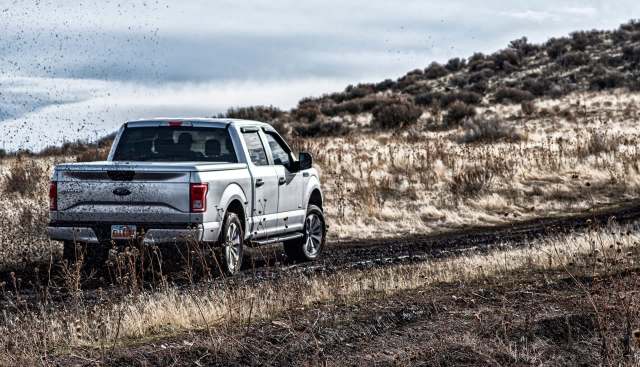
From Alaska through Canada, an F-150 Lightning towed 6,000 pounds, and the generator stayed idle
"Worst part of the frequency of charging was unhooking and rehooking the trailer."
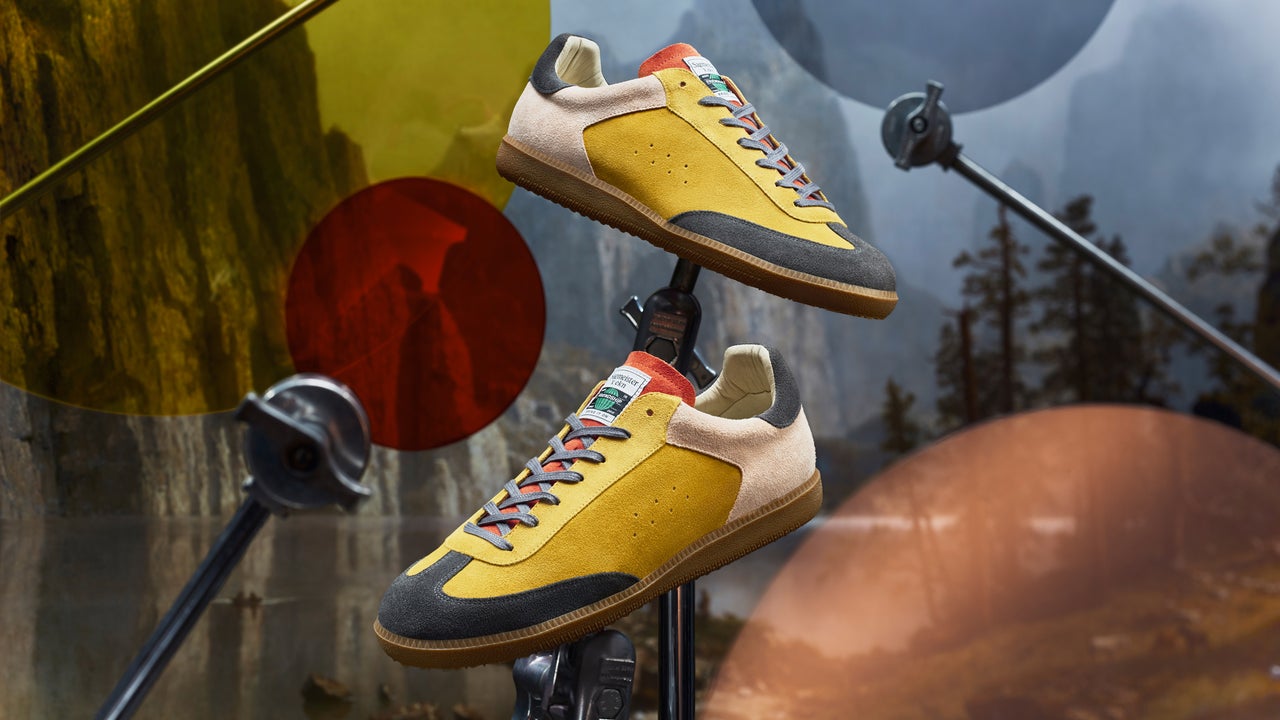
Data visualization turns charts, data, and statistics into something easier to comprehend. Turning that data viz into shoes makes the data into a functional conversation starter. That’s what the Austrian graphic designer Stefan Sagmeister did with two shoes he designed for Ekn, a German footwear brand, that are on view at his exhibition Finally, Something Good at the Paris gallery Gaîté Lyrique through April 2027. [Photo: © Marek Bäuerlein] Sagmeister says the exhibition is meant to look at the world over the long term rather than through daily news. Each shoe uses data to tell a story: one about renewable energy, and the other about homelessness. The key to understanding what the shoes say is written in the footbed. [Photo: © Marek Bäuerlein] The Bring It On, a multicolored sneaker about renewable electricity, uses data from the Energy Institute’s 2024 Statistical Review of World Energy to inform the relative sizes of color panels on its sides, with each leather panel representing a different energy source. Yellow, the largest color, represents hydropower, followed by black for wind, pink for solar, and red for all other renewables. “Wonderfully, the shoe is already out of date,” Sagmeister tells Fast Company. “In the 2025 figures, published this summer, solar passed wind for the first time, so today the pink panel should be slightly bigger than the black one.” [Photo: © Felix Schöppner, Stephan Braubach, Mirko Müller] His other shoe, Like a Complete Unknown, is a boot that uses circles to represent the relative homeless populations of six countries. The area of each circular appliqué corresponds to the number of people who are living in the streets and public spaces per 100,000 inhabitants, according to OECD data. The biggest circles are for the U.S., at 76, and Germany, at 46, followed by the U.K. (16), France (8), Mexico (5), and Japan (2). [Photo: © Marek Bäuerlein] “Countries count differently, so the numbers are not perfect, but Mexico, a much poorer country, reports a fifteenth of the American rate, and a gap that size is not only a counting difference,” he says. Sagmeister volunteered for the Coalition for the Homeless, an advocacy and service organization, and says what stayed with him from that experience was why some countries handle the same problem so much better than others. [Photo: © Marek Bäuerlein] The shoes are available for purchase on Ekn’s website. Both retail for more than $300, of which 10% goes either to the climate innovation think tank Future Cleantech Architects or the Coalition for the Homeless in New York, respectively. Sagmeister sees the inherent awkwardness between homelessness data and a boot costing 350 Euros, and says a donation “doesn’t make that go away.” He hopes people will take away that neither the data behind renewable energy nor homelessness is fate. “When the number of people sleeping in the street runs from two to 76 per 100,000 across six countries,” he says, that shows “it’s about decisions, and decisions can be made differently.”
Curated from Fast Company. Classified as Business & Technology by AI, which sometimes makes mistakes.
"Worst part of the frequency of charging was unhooking and rehooking the trailer."
"Those who are least prepared are young adults and urban residents."
"Our programs help people take practical next steps."