
The Cool Down10/16/2026
Once-doubted power plan now gets a hearing over ratepayer savings
Residential customers would see a 2.9% securitization rider in 2027.
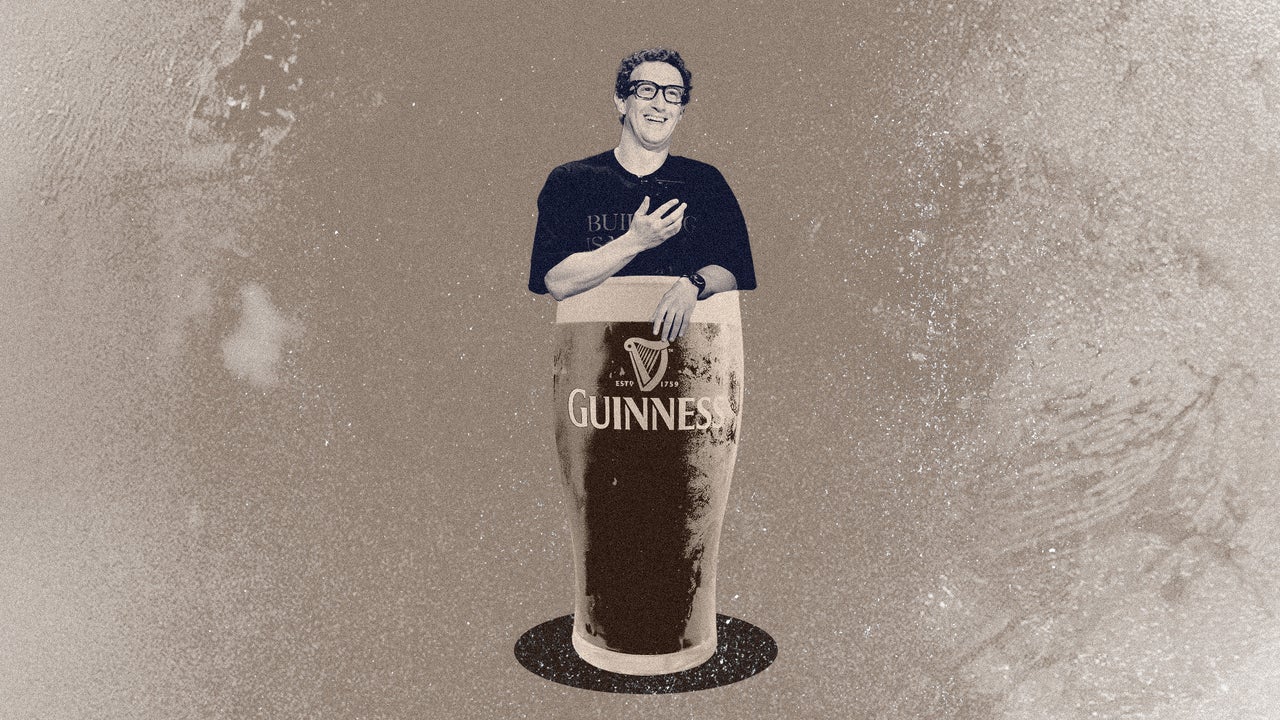
Mark Zuckerberg took a sip of Guinness the other day, and the internet noticed. Specifically, a clip from the Meta founder’s appearance on a podcast called The Cheeky Pint—which involves talking tech over a beer with host (and Stripe cofounder) John Collison—caught his notably unenthusiastic facial expression in response to the Irish stout. He looks, as one observer put it, as if he has just “accidentally swallowed the little paper cup of fluoride at the dentist’s office.” Safe to say Mark Zuckerberg isn’t a fan of a pint of Guinness then pic.twitter.com/HeriiOnpgA— Pints Drank (@PintsDrank) October 13, 2026 Funny. But what’s the big deal? Zuckerberg isn’t the first to discover that Guinness isn’t for everybody. Why did the Guinness Wince morph into a viral roasting? Probably because, you know, he’s Mark Zuckerberg. Surreally rich and powerful, he’s a figure who remains effectively cloistered and out of reach from most of the routine frictions of everyday life. Like his billionaire peers, he inhabits spaces he controls (mansions, yachts, private jets) or where his appearance is carefully choreographed (congressional hearings, product unveils, whatever this is), while other people literally make movies speculating about various phases of his career. Seeing a master of the corporate universe do something as human as wince at an unfamiliar brew is just . . . weird. And in a way, these rare incidents function as a litmus test for authenticity, maybe even normality. The last similarly high-profile example was the promo clip of McDonald’s CEO Chris Kempczinski gingerly biting into the chain’s then-new Big Arch burger. Again, the internet noticed, and judged Kempczinski a man who did not eat fast food. Burger King and Wendy’s noticed, too, offering videos of their top executives taking ravenous burger bites, converting the physical act of consumption into a brand-reputation performance. These moments don’t always read like the actions of confused aliens. Elon Musk has, not surprisingly, made his mark in this genre with fully characteristic displays of excess, knocking back three beers in his own appearance on The Cheeky Pint, and infamously puffed a blunt on Joe Rogan’s podcast. NVIDIA chief Jensen Huang has turned his public food moments into signals of accessibility and cultural curiosity: He’s been recorded eating Beijing street noodles and Korean fried chicken, and handing out red bean buns in Tokyo. There’s a site devoted to his food forays. But for most billionaires, such scrutiny is more of an adjustment. Politicians, for whom performing normality is part of the electoral process, learn the tricks of public consumption early: hoisting a beer with salt-of-the-earth gusto, while avoiding gaffes such as eating pizza with a fork, or having anything to do with a county fair corn dog. CEOs, in contrast, are not required to rub elbows with the hoi polloi. And that is exactly why these occasional awkward appearances are so funny and fascinating to the rest of us. We don’t have much sense of the Zuck life, but at least we all eat and drink, and know what that’s supposed to look like, regardless of income status. Weird variations—particularly involving familiar brands (or even a CEO’s own brand) are not just amusingly suspicious but almost reassuring. In retrospect, The Cheeky Pint gimmick of serving beers seems like a deliberately humanizing move. In the wake of the Zuckerberg commotion, another show, European Technology Network, has posted a ranking that purports to document which Cheeky Pint guests drank the most. (Musk is winning.) “That’s just my face,” Zuckerberg joked in response to the episode—and in fairness he apparently drank two beers on the show. The incident comes at an interesting time in the arc of the Meta chief’s public image. He recently granted an interview to The New York Times’ chief fashion critic to talk about the role of aesthetics and style in his company’s next chapter, and how that relates to his own evolving taste (which has included a “bro-next-door” makeover, combined with mixed-martial-arts and strength training). In other words, he’s hard at work trying to control how he’s perceived. And most of the time, the rest of us can only look on and wonder. Incidents like the Guinness Wince have a kind of leveling function: They give us the rare chance to peek through all that image management and distance, and pass judgment. On such matters, however silly, we’re the ones in control.
Curated from Fast Company. Classified as Business & Technology by AI, which sometimes makes mistakes.
Residential customers would see a 2.9% securitization rider in 2027.
For the generation that grew up with devices at their fingertips and social media as an extension of their life, a new shift is pushing Gen Z away from the screen and toward the real world. A 2026 report by Quad and The Harris Poll explored how consumer behavior is changing in favor of physical experiences, finding that “real is the new premium.” The shift seems to be driven by fatigue from scrolling, texting, emailing, and using AI tools. While nearly a third of older generations agree with the sentiment, Gen Z is leading in fatigue, with 49% of those polled reporting they feel drained from scrolling on social media, and 74% saying they wished they could more easily disconnect from devices. Americans are taking different steps to cut back on screen time, from deleting apps to leaving their phones at home. But Gen Z is actively looking for alternatives. The report found that 28% of Gen Zers intentionally attend phone-free experiences, and 25% buy analog alternatives to digital devices—rates that are both higher than the national average. Opting for physical experiences and non-digital objects seems to be part of a wider trend for American consumers. In fact, around 80% of Americans said they are drawn to real-world experiences that don’t revolve around screens. The shift is also fueling an interest in collectibles and physical objects like sneakers, toys, and trading cards. For instance, 79% of Gen Z say they feel more connected to the real world by collecting objects, while 84% of the general population says they prefer physical objects over digital ones. The collectible craze is not fueled by resale value, with more Americans saying they like collecting due to nostalgia, self-expression, and simply for the love of interacting with a physical item. For brands, investing in the physical space and experience can help bring in a new wave of customers. The report found that 63% of Americans may visit stores due to the design alone, with the percentage rising to 76% for Gen Zers and millennials. Young customers are not only looking for a space to visit, but also one to linger in—with 3 out of 4 Gen Zers and millennials seeking spaces to sit, work, or meet friends, transforming the retail space into a place to stay.
"Money was with me within 9 days (including having a physical valuation of the property)."