

The Cool Down10/16/2026
Once-doubted power plan now gets a hearing over ratepayer savings
Residential customers would see a 2.9% securitization rider in 2027.
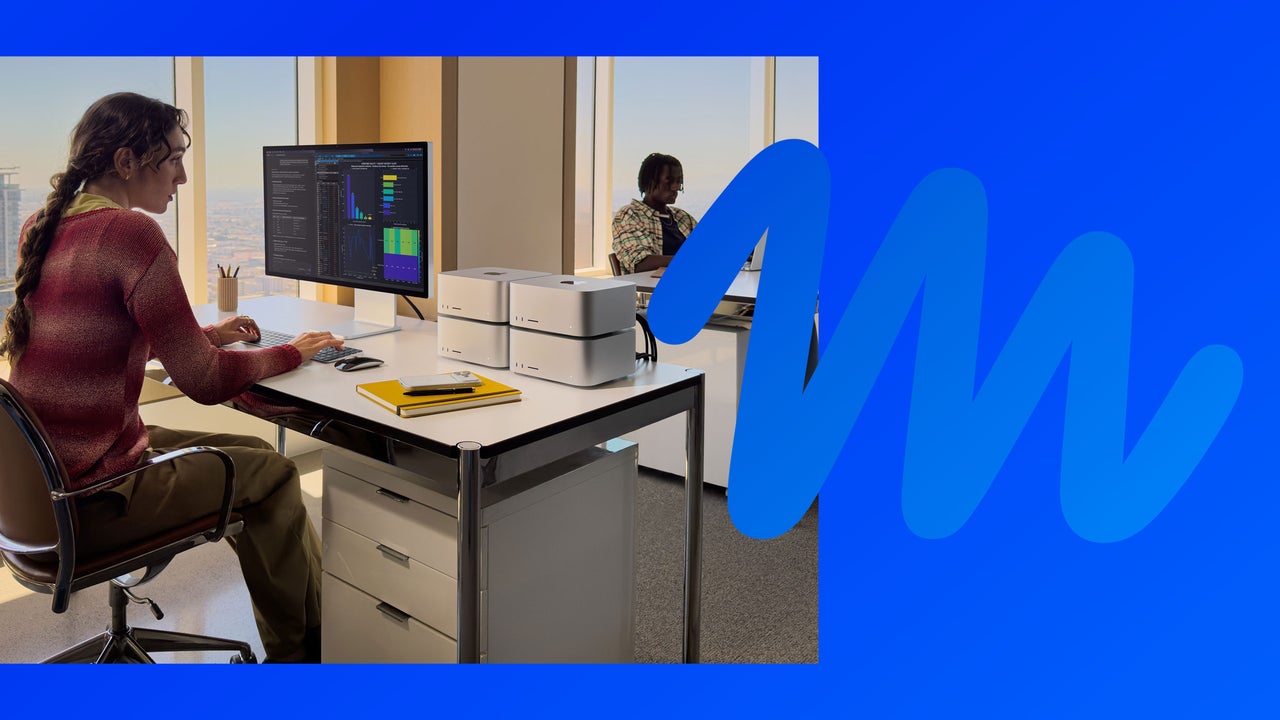
Meta released a new version of its Muse Spark LLM on Thursday. As its name indicates, the big news about Muse Spark Open is that it’s an open-weight model. Rather than being offered solely as a cloud service, it’s publicly available for anyone to run on their own hardware. With 816 billion total parameters and a 1-million-token context window, it’s the U.S.’s most capable open-weight model, according to Meta. As I wrote in a recent feature, Meta’s AI story dates all the way back to the founding of its original AI lab in 2013. One of this long journey’s high points happened in 2023-2024, when its open-weight Llama model was embraced by companies that wanted to control their own AI rather than rent it from a company such as OpenAI or Anthropic. But that momentum evaporated last year when Llama 4 was widely regarded to be a dud. That set off a chain of events inside Meta. Scale AI CEO Alexandr Wang joined the company to head a new research organization, Meta Superintelligence Labs. Llama gave way to a new family of models, starting with Muse Spark. But they were closed cloud services, not open-weight. With Muse Spark Open’s arrival, Meta has a shot at rekindling the excitement over Llama. By running open-weight models on their own infrastructure, companies can avoid uploading confidential data—from medical records to unreleased movie footage—to third-party services. They can tweak the model for specific purposes. And since they own the hardware, they can gorge on tokens without racking up any fees. During a media briefing yesterday, I got a demo of some of Muse Spark Open’s capabilities. It wrote a script to perform math, helped code a social feed app, and selected video clips and edited them into a longer sequence. It all worked, though I’ll reserve judgment on how well it performs these sorts of tasks compared to other models until hands-on reactions from AI developers start to come in. But the demo I saw was notable in part because it took place at Apple, not Meta. Muse Spark Open was running on two Mac Studio computers cabled together into a cluster—essentially a tiny desktop data center. Historically, Apple and Meta have not exactly been allies. Indeed, when Apple executives such as Tim Cook touted the company’s commitment to privacy, it was seen as an implicit attack on Meta’s business model. The ability to run local AI that rivals cloud AI has unexpectedly aligned these two very different companies’ interests. When Apple released the first Mac Studio in March 2022, running AI models capable of autonomously writing software and editing movies was presumably not on its mind. Even the original version of ChatGPT had not yet been announced. But the company certainly was thinking about artificial intelligence. The Apple-designed M1 Max and M1 Ultra processors available for the Studio both sported Neural Engine units optimized to run local AI. The Mac Studio and two of Apple’s AI-optimized chips, the M6 and M5 Ultra. [Photo: Apple] Fast-forward to this year. Using Macs as dedicated AI machines has become a phenomenon, and Apple has been leaning into it. At the consumer end of the spectrum, serious AI types are using agents such as OpenClaw on Mac Minis, leading to shortages of the diminutive computer. Building a cluster of two or four Mac Studios to run Muse Spark is an industrial-strength version of the same idea. Practically speaking, it requires a total of 1 TB of RAM between the computers; any sufficiently equipped setup will cost tens of thousands of dollars. Still, it’s an unusually approachable way to run your own local AI, because Mac Studios are, well, Macs. They run MacOS, plug into standard wall outlets, and can sit stacked on a desk rather than requiring a rack. Along with further optimizing the newest Mac Studio models for AI, Apple has created a software technology called MLX to optimize its computers to run machine learning software such as LLMs. The company worked with Meta to make sure Muse Spark Open operates well on a Mac Studio cluster, but MLX also helps less resource-intensive models such as China’s Qwen run on less over-the-top hardware, such as a single Mac Studio. Mac Studios aren’t mandatory for Muse Spark Open, which can also run on non-Apple infrastructure. Still, given the Mac’s burgeoning popularity as an AI machine—and Apple’s investment in AI from the silicon on up—it’s easy to see why Meta would prioritize Mac Studio setups. It’s equally obvious why Apple, which hasn’t built a general-purpose LLM of its own, has a powerful incentive to offer the best infrastructure for Muse Spark Open and other open-weight models. For Apple, making nice with Meta on this particular front doesn’t just boost the fortunes of its highest-end computers. It’s also a sign that the company, which was long derided for being “behind in AI,” might have outfoxed pundits who thought that success was synonymous with taking on OpenAI, Anthropic, and Google—and Meta—as a frontier AI lab. As long as AI helps drive sales of Apple’s platforms, it’s winning.
Curated from Fast Company. Classified as Business & Technology by AI, which sometimes makes mistakes.
Residential customers would see a 2.9% securitization rider in 2027.
For the generation that grew up with devices at their fingertips and social media as an extension of their life, a new shift is pushing Gen Z away from the screen and toward the real world. A 2026 report by Quad and The Harris Poll explored how consumer behavior is changing in favor of physical experiences, finding that “real is the new premium.” The shift seems to be driven by fatigue from scrolling, texting, emailing, and using AI tools. While nearly a third of older generations agree with the sentiment, Gen Z is leading in fatigue, with 49% of those polled reporting they feel drained from scrolling on social media, and 74% saying they wished they could more easily disconnect from devices. Americans are taking different steps to cut back on screen time, from deleting apps to leaving their phones at home. But Gen Z is actively looking for alternatives. The report found that 28% of Gen Zers intentionally attend phone-free experiences, and 25% buy analog alternatives to digital devices—rates that are both higher than the national average. Opting for physical experiences and non-digital objects seems to be part of a wider trend for American consumers. In fact, around 80% of Americans said they are drawn to real-world experiences that don’t revolve around screens. The shift is also fueling an interest in collectibles and physical objects like sneakers, toys, and trading cards. For instance, 79% of Gen Z say they feel more connected to the real world by collecting objects, while 84% of the general population says they prefer physical objects over digital ones. The collectible craze is not fueled by resale value, with more Americans saying they like collecting due to nostalgia, self-expression, and simply for the love of interacting with a physical item. For brands, investing in the physical space and experience can help bring in a new wave of customers. The report found that 63% of Americans may visit stores due to the design alone, with the percentage rising to 76% for Gen Zers and millennials. Young customers are not only looking for a space to visit, but also one to linger in—with 3 out of 4 Gen Zers and millennials seeking spaces to sit, work, or meet friends, transforming the retail space into a place to stay.
"Money was with me within 9 days (including having a physical valuation of the property)."